Order) Passeriformes
Family) Turdidae
Species) Introduced
Length) 25 cm
Weight) 90 g
Other Names) Eurasian blackbird, common blackbird
Threats) Sparrow hawks ,Rats, Cats, Stoats
Identification
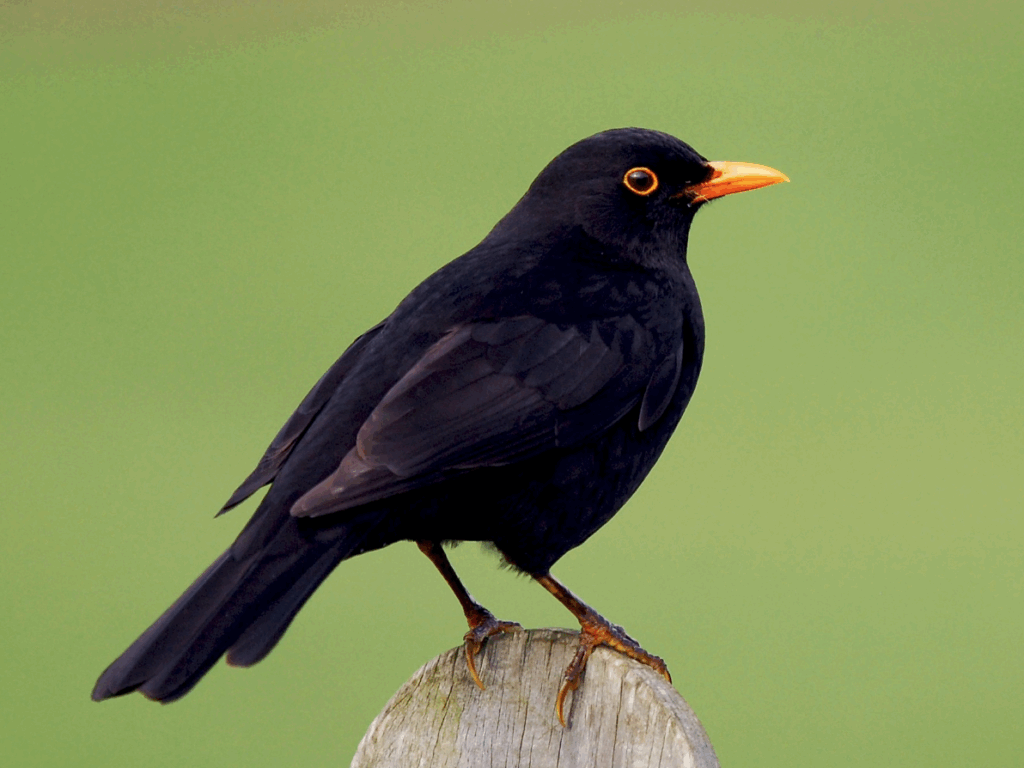
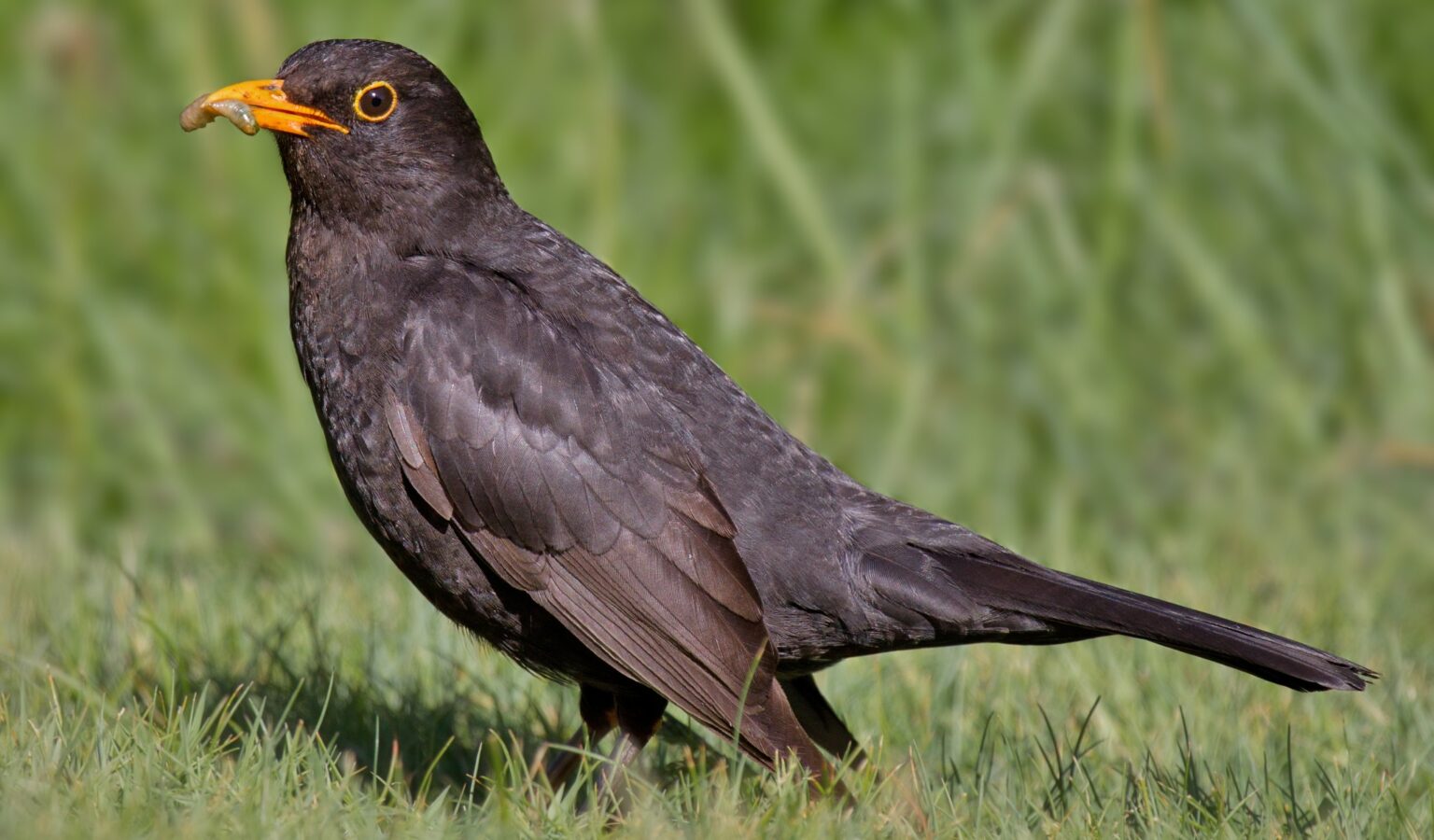
The black bird is a medium-sized songbird that is entirely black in adult males with a yellow bill, abundantly found on waiheke around household properties and tree branches.
The blackbird was introduced to New Zealand, and is now our most widely distributed bird species. Blackbirds are common in a wide range of habitats including suburban gardens, farmland, woodlands and indigenous forests.
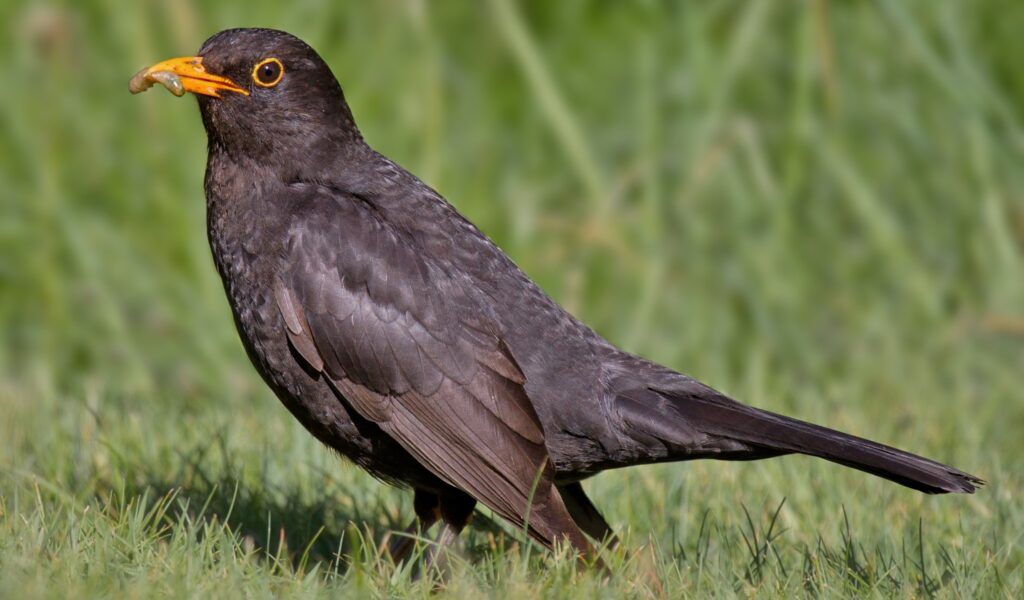
Adult males are entirely black apart from their yellow bill and eye-ring. Females and juveniles are mostly dark brown, slightly mottled on the belly and their bill is light brown.
Their song is given from winter to summer, with the singing male usually perched on a high branch, tree top or power line. They sing most in the early morning and evening. The loud male territorial advertising song is mainly given from July to January. The song is similar to that of the song thrush, but without the repeated phrases that characterize thrush song. Other calls are given throughout the year, including a sharp quickly repeated alarm call made if a predator threatens.
The main negative impact of blackbirds is the damage they may cause to commercial fruit crops. They can also spread the seeds of weedy plants, and are often a nuisance in gardens by scattering mulch and newly planted seed beds and lawns.
The positive side of blackbirds is they eat snails and slugs and other garden and horticultural invertebrate pests.
They are strongly territorial birds, and may chase other species, including tui.
Breeding
Blackbirds breed as solitary, monogamous pairs nesting species, nesting between August and February, with a September – November peak in most regions.
Males establish territories from about April-May.
Nests are usually well concealed by foliage in the forks of shrubs or trees 3 to 10 metres above the ground and are a well-constructed woven bowl of grass, small twigs, moss, fragments of plastic bags, dead leaves and may be lightly lined with mud the nest is also built together by both male and female.
Eggs are laid from August to December.
Three or more clutches (typically of 3-4 greenish-blue eggs) may be laid during a season especially if an earlier clutch is lost.
Incubation and feeding the chicks is also shared between by both parents.
The nestlings are blind and naked when hatched. They are well feathered 12-13 days after hatching, and fledge when about 13-15 days old, they are still fed a few weeks after leaving the nest by their parents.
Food
Blackbirds feed mostly on the ground on earthworms, snails, and insects and spiders. They also take berries while perched in foliage such as coprosma, and can eat ripening fruit in orchards. .
They are often seen to ‘listen’ for food, e.g. earthworms, beneath the ground surface.
Waiheke Locations
Household Gardens – I have a few black birds that hang around our property and feed on insects, create nests and bathe in our bird baths.
Black birds are flying birds so they can really be anywhere on Waiheke but not just Waiheke they are all over New Zealand, these are just areas I’ve spotted them and photographed.
References
https://www.nzbirdsonline.org.nz/ (Website used for journalistic purposes)
Gallery