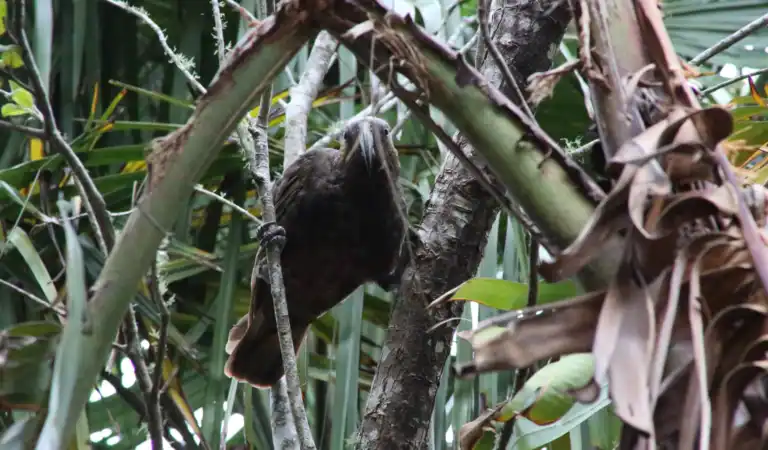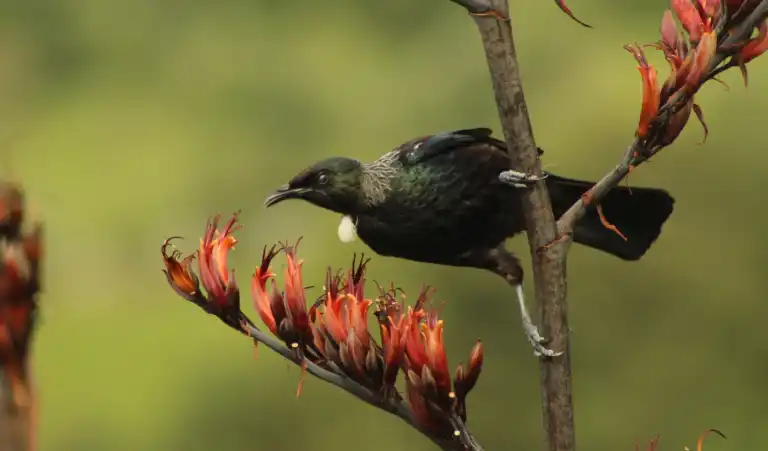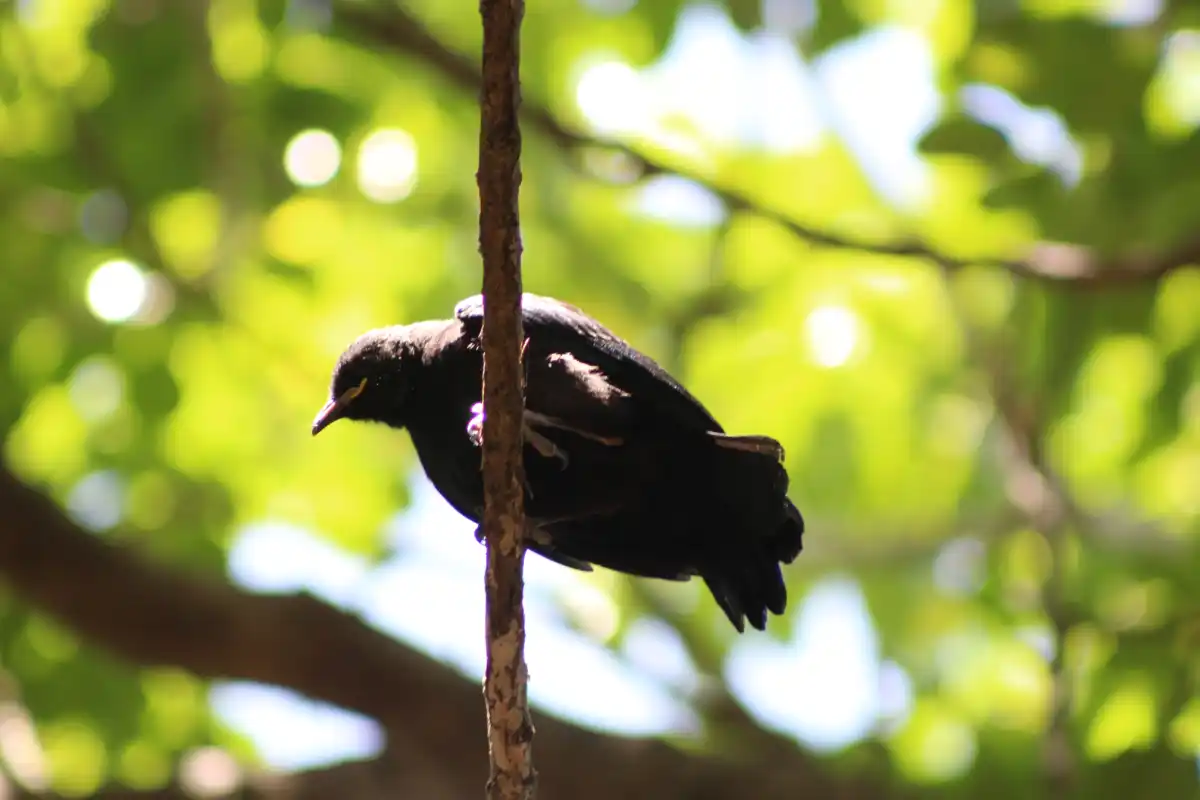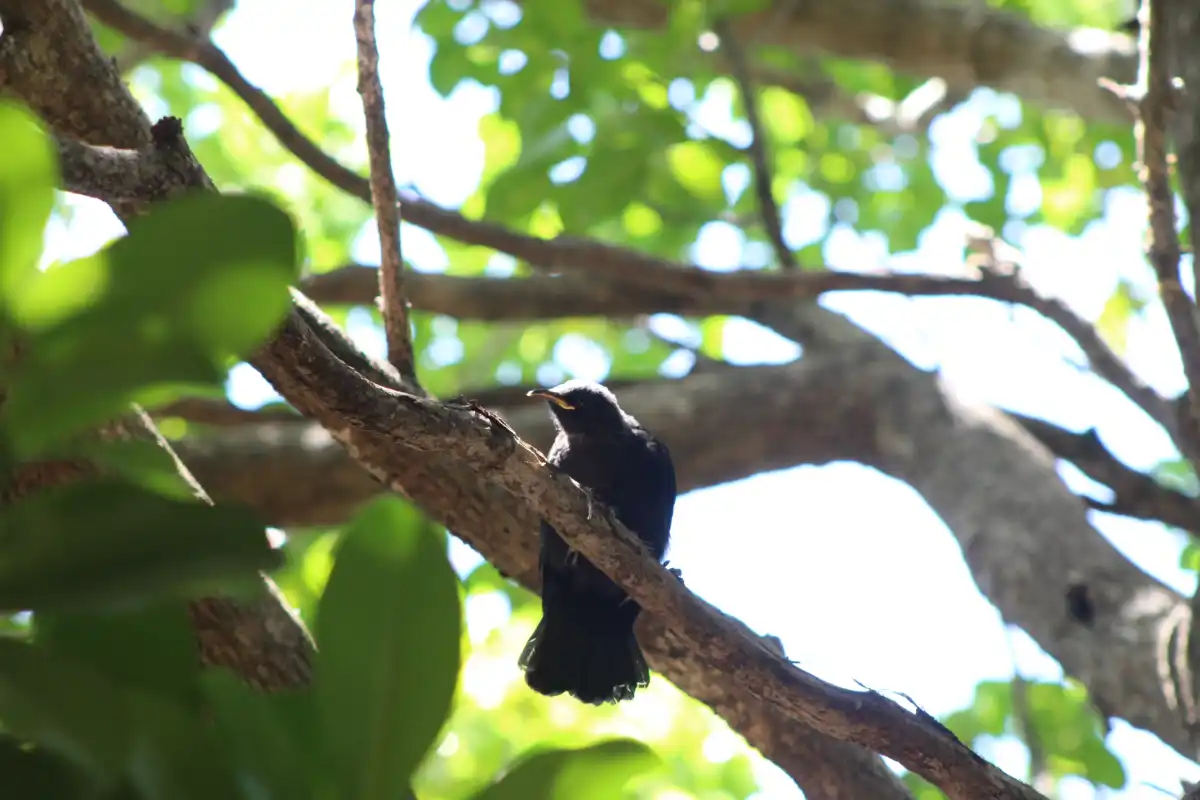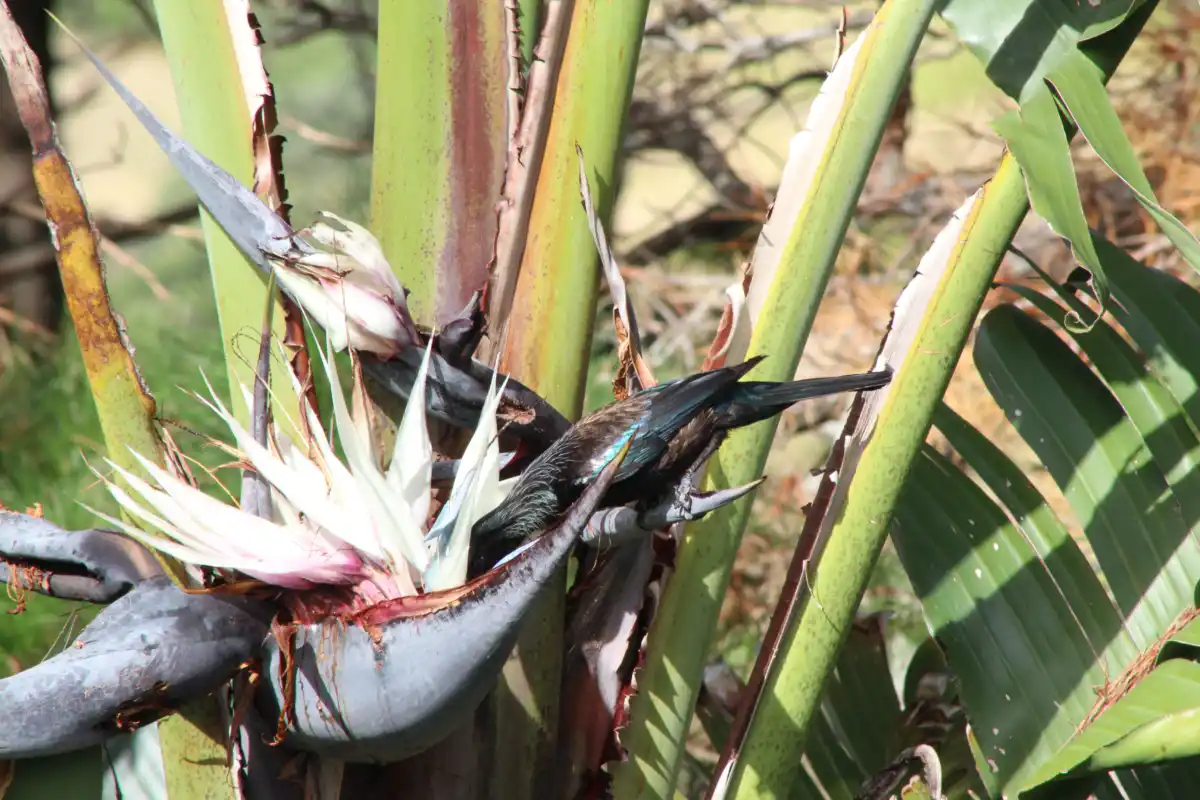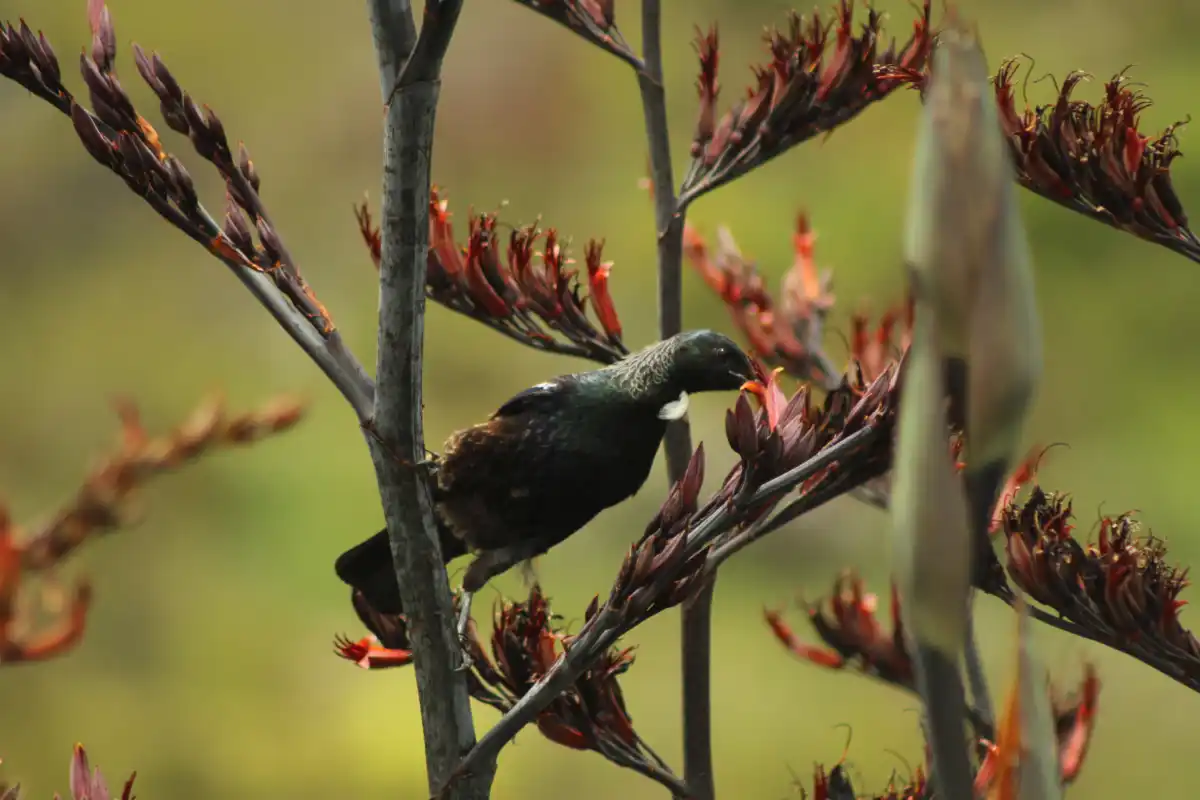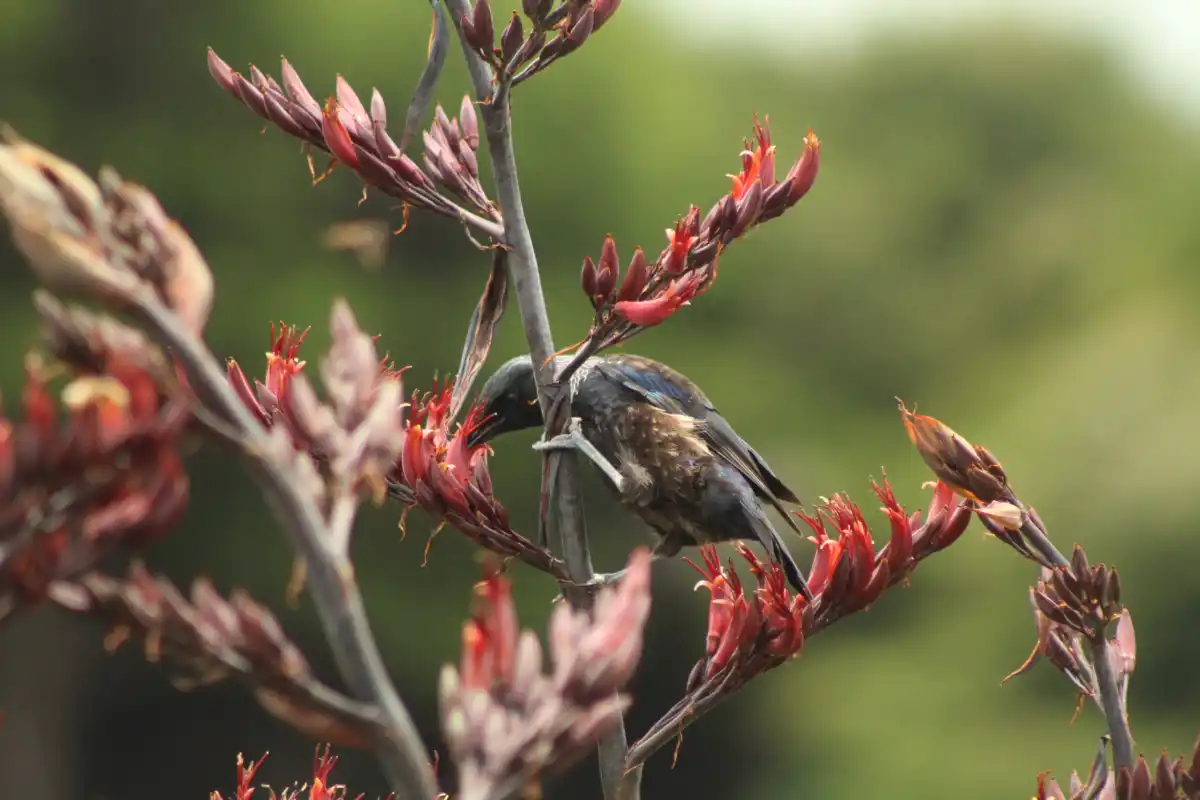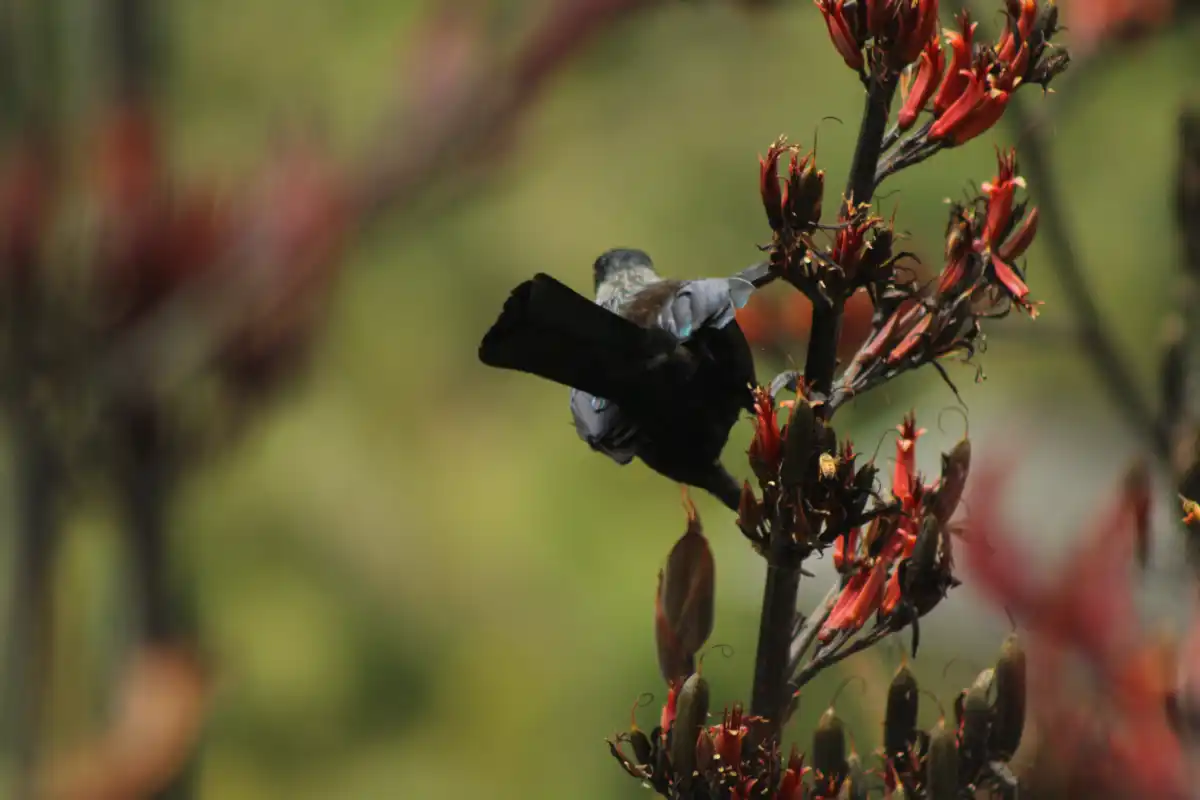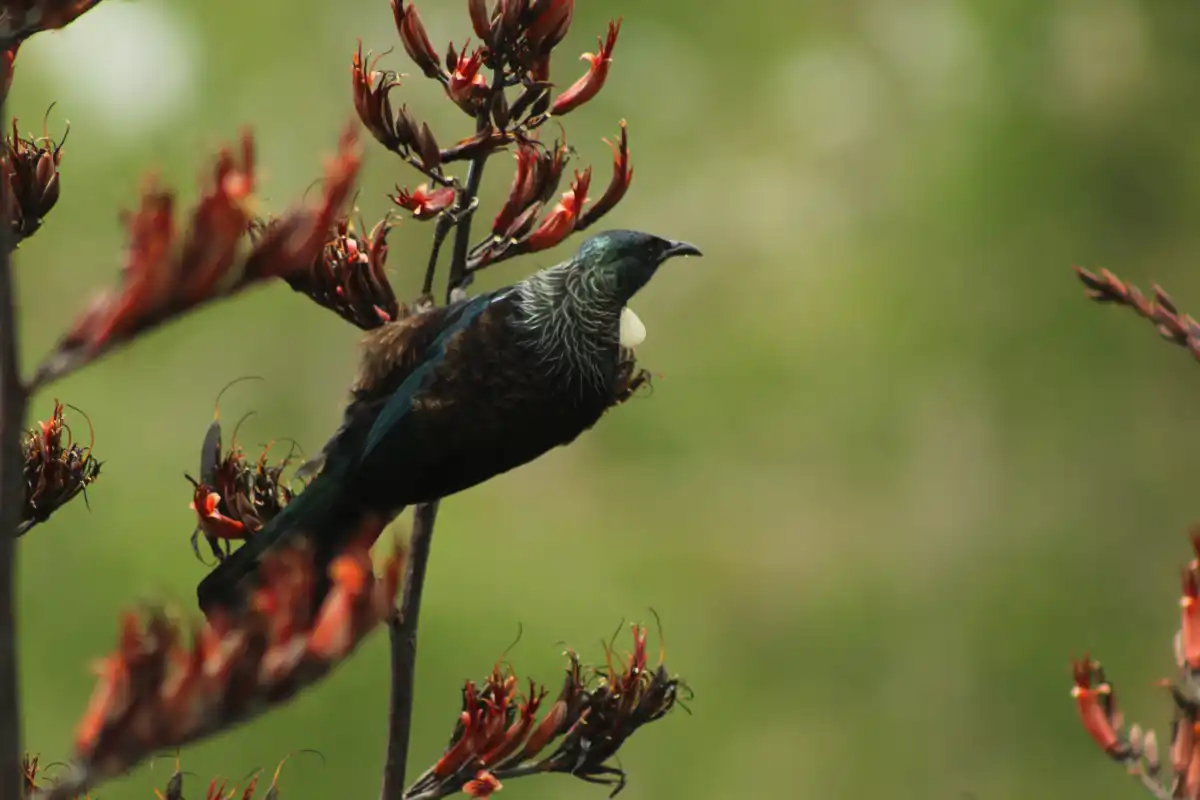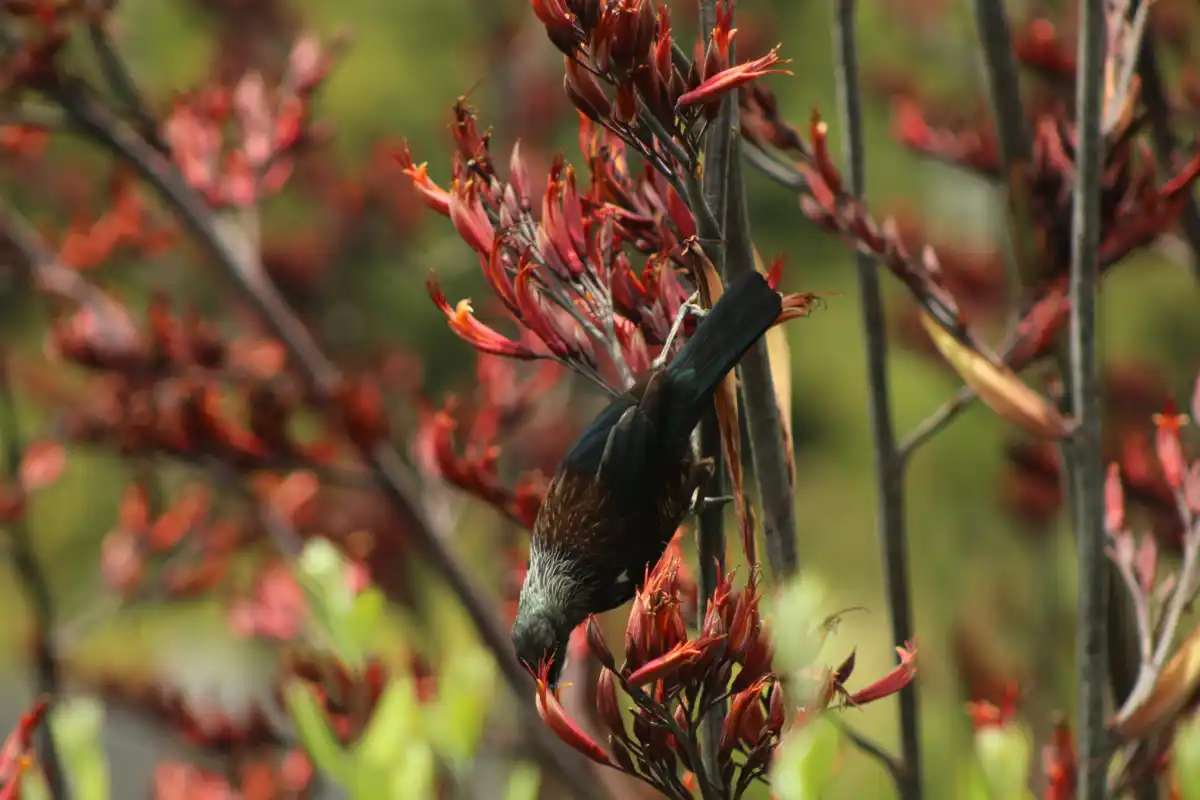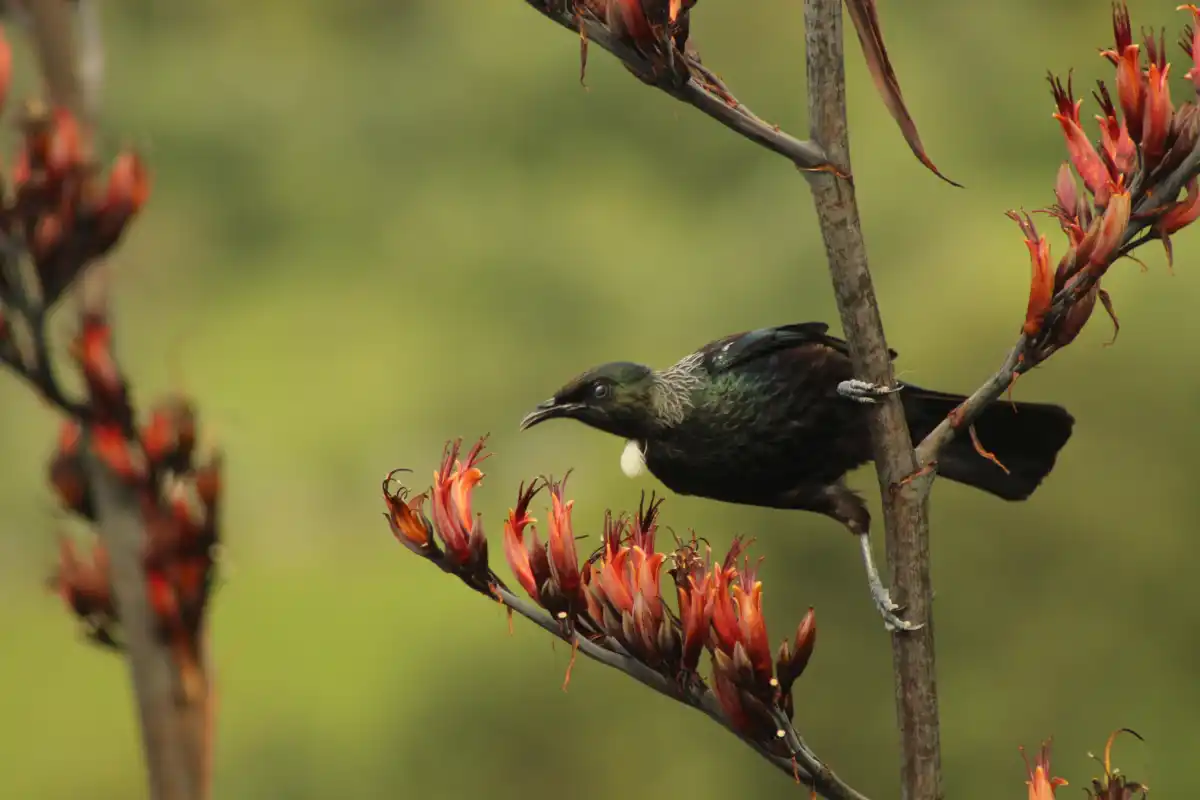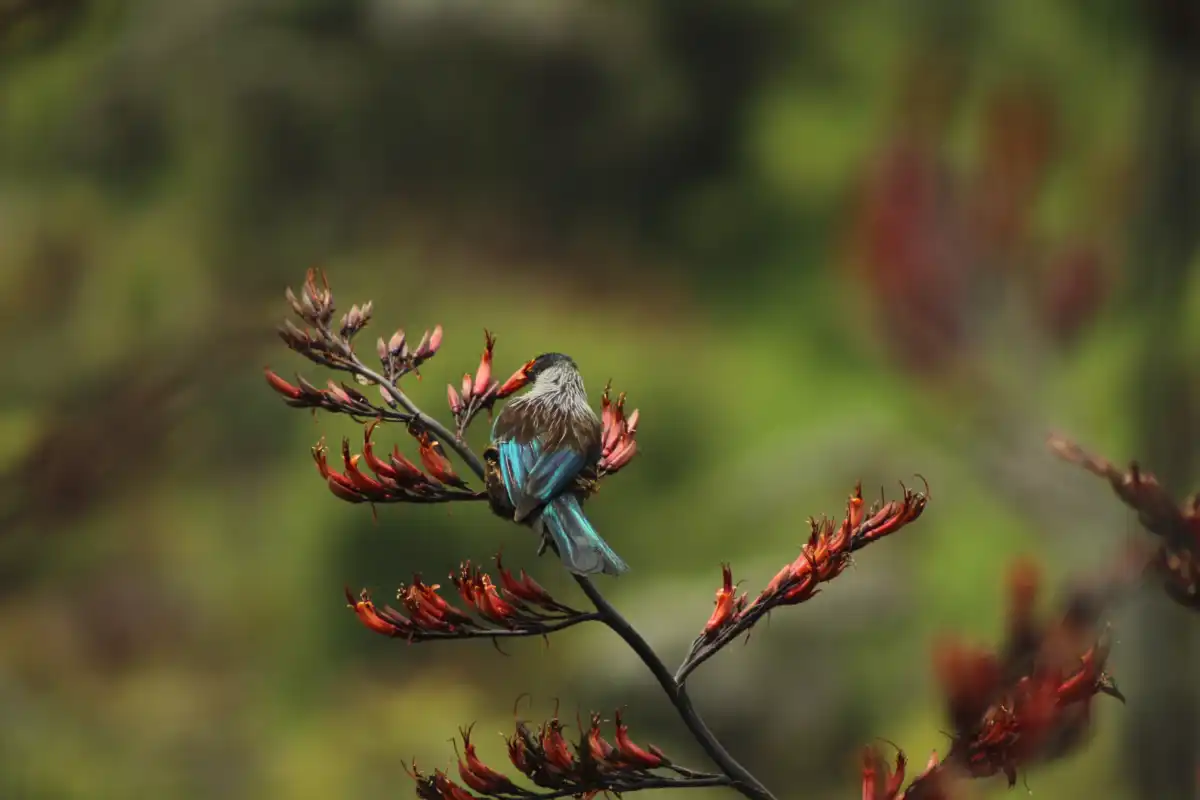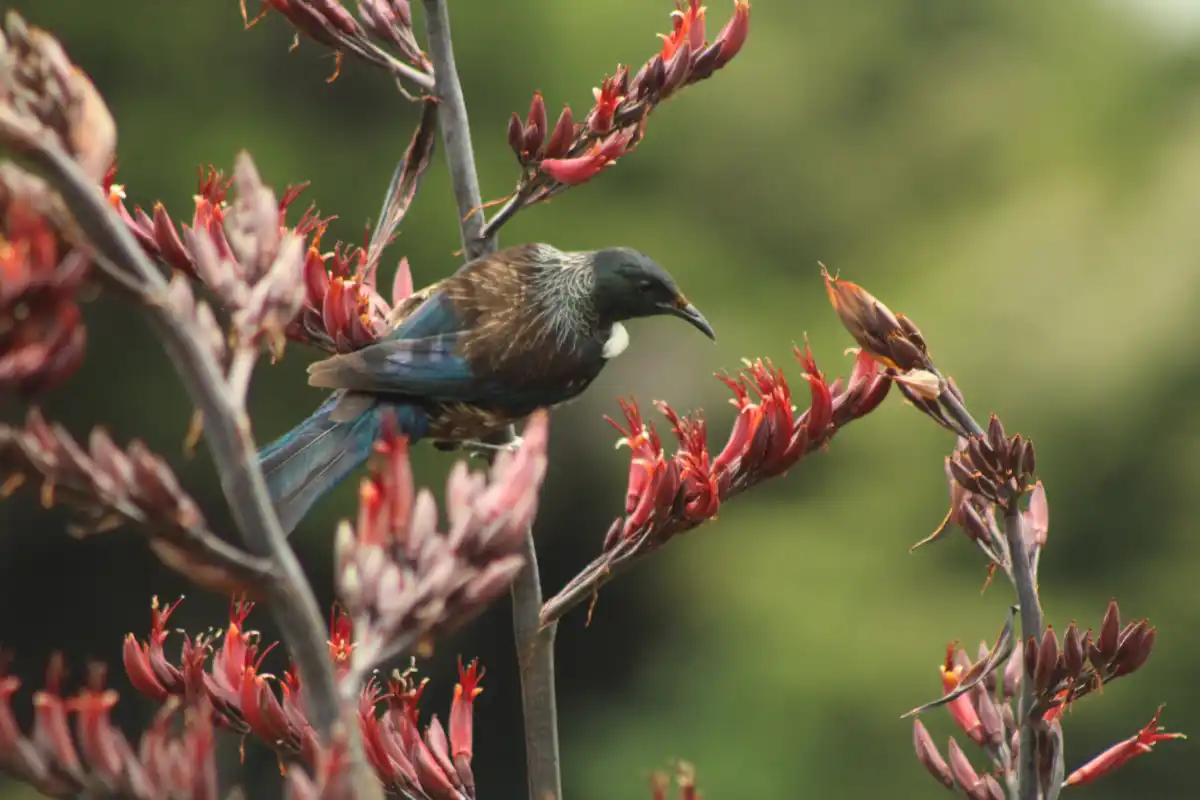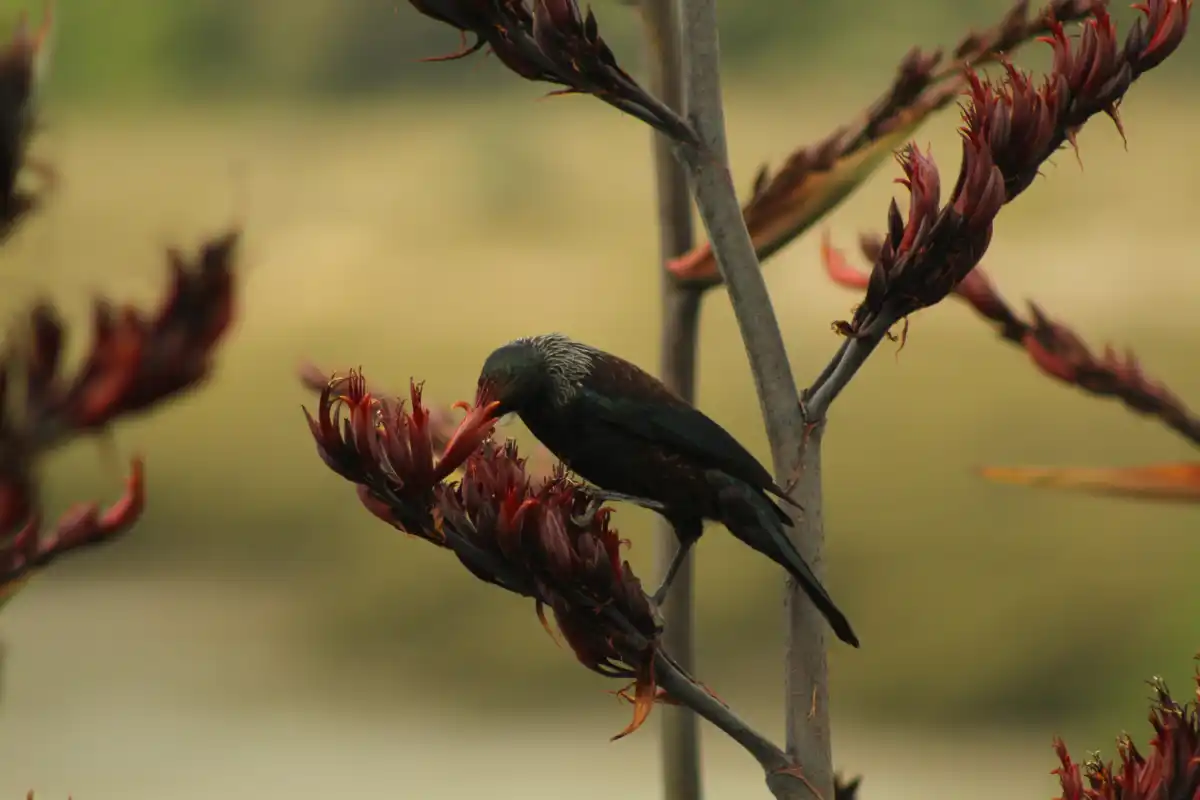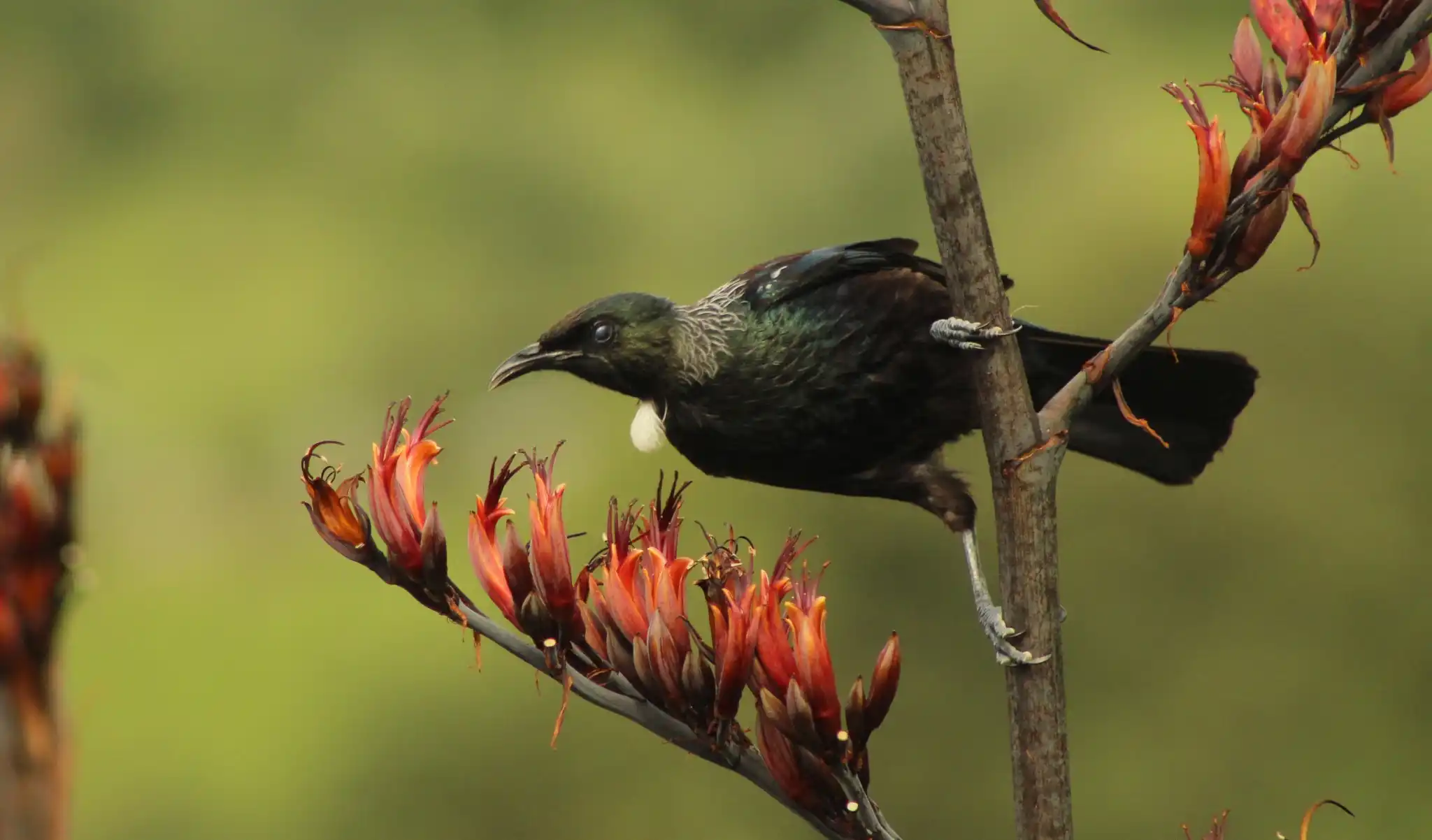
The Tui is a iridescent blue-green honeyeater with two curled white feather tufts on the throat. Locations found on Waiheke are around flaxes feeding off nectar.
Tūīs are only native to New Zealand. They are one of the country’s most iconic birds. They are a boisterous, medium-sized, common and widespread bird of forest and suburbia.
They look black from a distance, but in good light tūī have a blue, green and bronze iridescent sheen, and distinctive white throat tufts (poi).
The upper back and flanks are dark reddish brown with a bronze sheen, the nape and sides of the neck have filamentous white feathers, and there are two unusual curled white feather tufts on the throat (poi). Small white shoulder patches on the upperwing show prominently in flight, but are usually concealed when perched. The bill and feet are black, and the eye dark brown.
The sexes are alike, but the male is larger.
They are usually very vocal, with a complicated mix of tuneful notes interspersed with coughs, grunts and wheezes. In flight, their bodies slant with the head higher than the tail, and their noisy whirring flight is interspersed with short glides. In flight, tūī maintain contact and harass raptors with a repetitive scream.
Tūī are notoriously aggressive, and will defend a flowering or fruiting tree, or a small part of a large tree, from all-comers, whether another tui or another bird species. They vigorously chase other birds away from their feeding territory with loud whirring wings.
Tūī play a very important role in the dynamics of New Zealand forests because they are one of the most common pollinators of flowering plants, and also disperse the seeds of trees with medium-sized fruits.
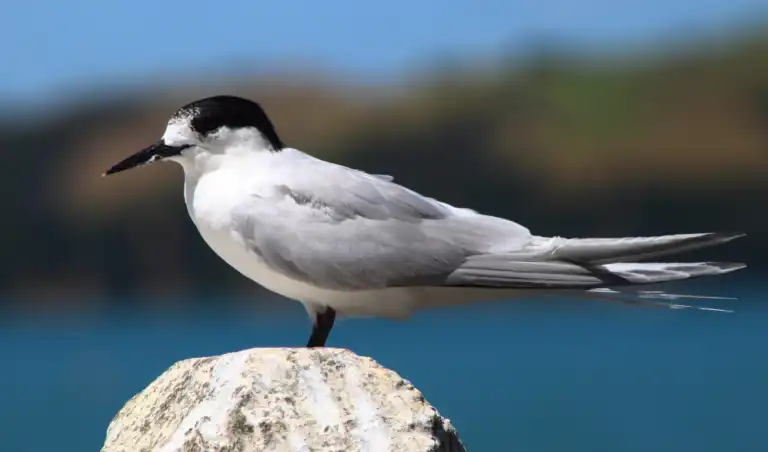
The white-fronted tern is a medium-sized, long-tailed sea tern commonly around New Zealand coasts. Spotted congregating on Waiheke wharfs such as Matiatia and Orapiu.
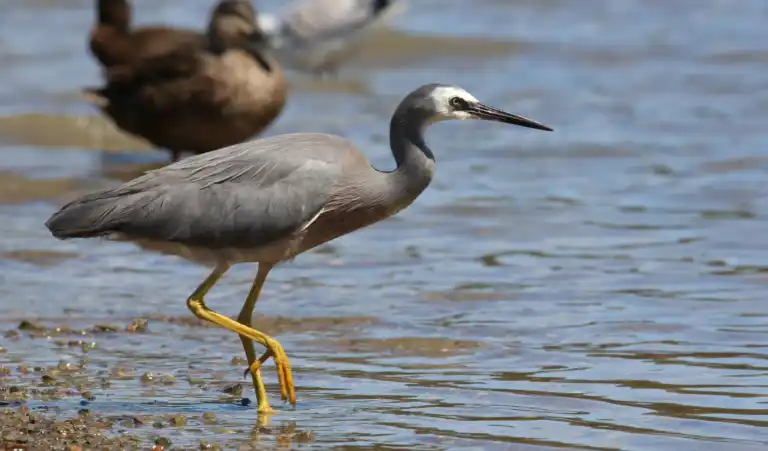
The white-faced heron is a tall, elegant, blue-grey bird usually spotted stalking prey. Locations found on Waiheke are Mangroves, Anzac bay and quiet beaches.
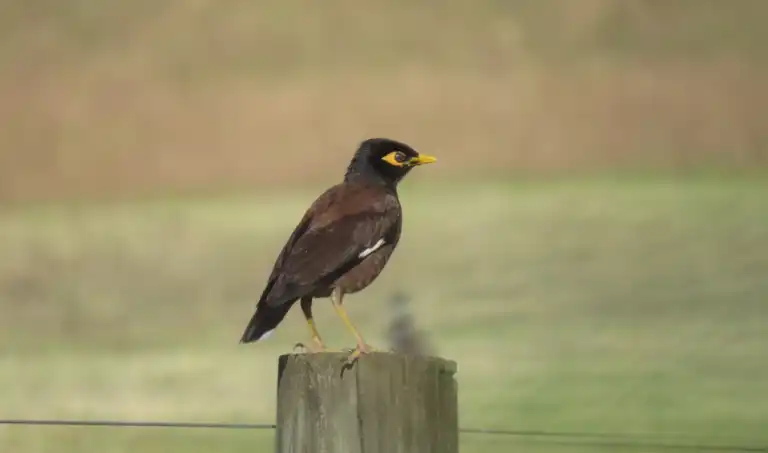
Mynas are stocky brown birds with a shiny black head and shoulders. Commonly found on road sides on Waiheke, usually playing chicken with cars while foraging for food.
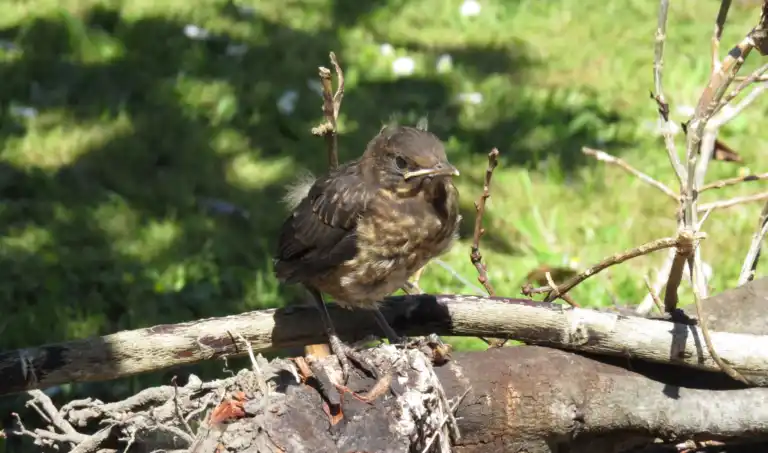
The thrush is a medium-sized songbird with a speckled brown-on-cream breast, usually heard before it is seen, found in grass reserves, gardens and trees on Waiheke.
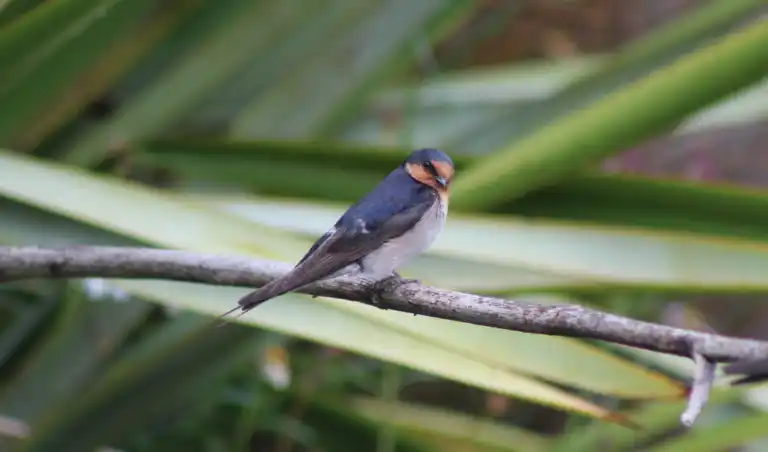
Welcome swallows are small fast-flying birds, they are usually seen around waiheke during breeding season between August and February on powerlines, fences and beaches.
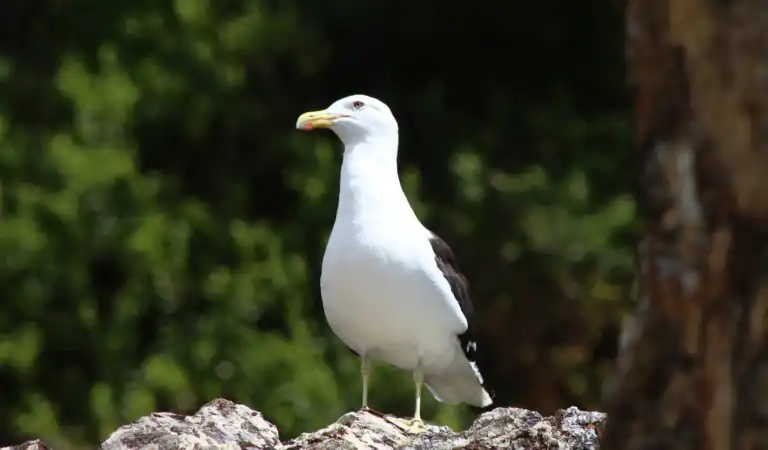
The Black-backed gull is a large black-and-white gull with a white head and underparts, black back, yellow bill with a red spot near the tip. Located on Waiheke beaches.
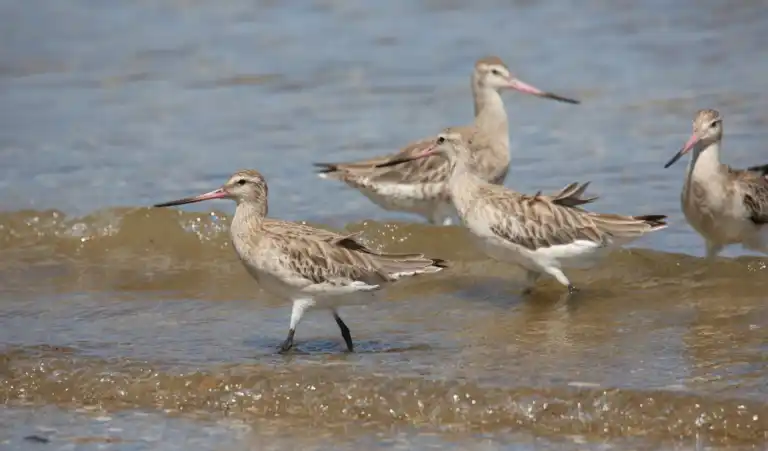
The Godwit is a migrant from Alaska, they fly 8-9 days straight to arrive in NZ. They can be found on Waiheke from September - March located at Blackpool.
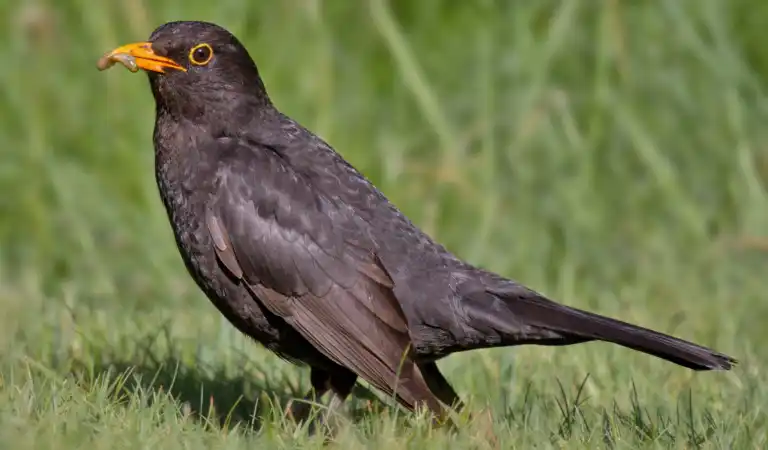
The black bird is a medium-sized songbird that is entirely black in adult males with a yellow bill. Abundantly found on Waiheke around household properties and trees.
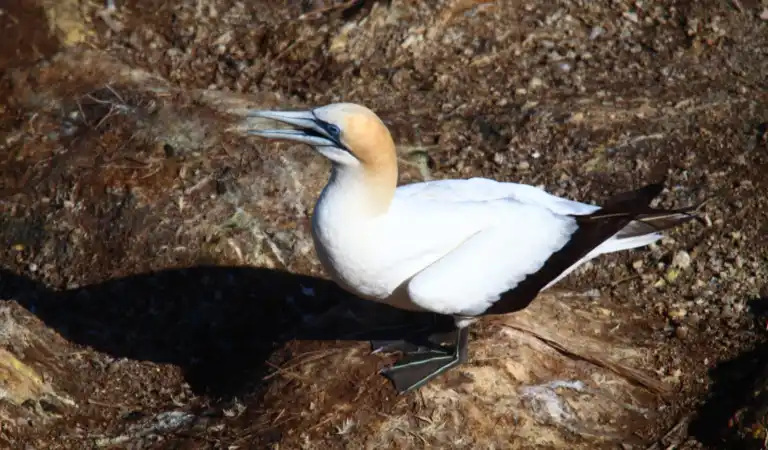
The gannet is a large slender-bodied seabird with mainly white plumage, buff-yellow head and neck. Occassionally seen around Waiheke searching for food in ocean depths.
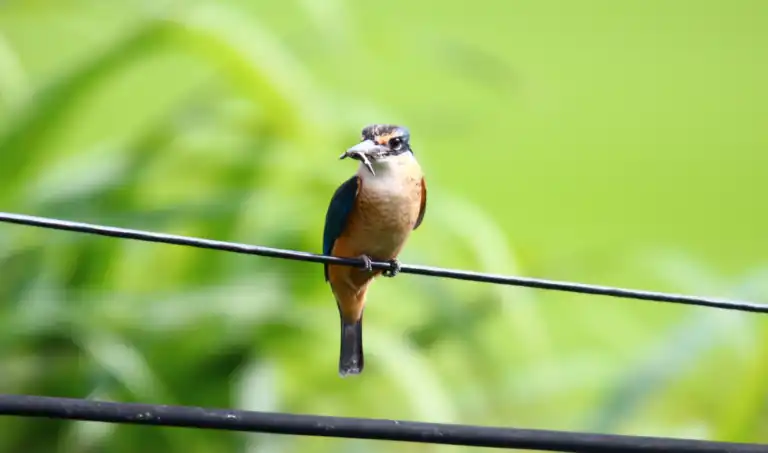
The sacred kingfisher is a distinctive bird with a green-blue back, buff to yellow undersides and a large black bill. they can be found nearby tidal beaches on waiheke.
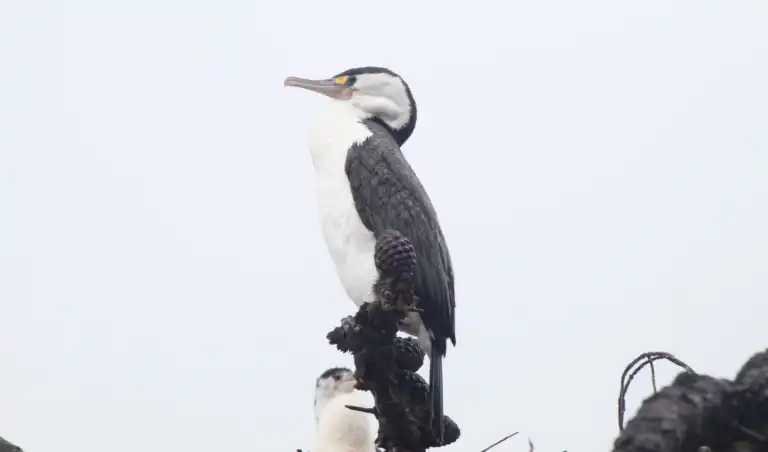
This large black-and-white shag is often seen individually or in a group, usually spotted in the ocean searching for food or hanging around fisherman by the rocks of Waiheke.
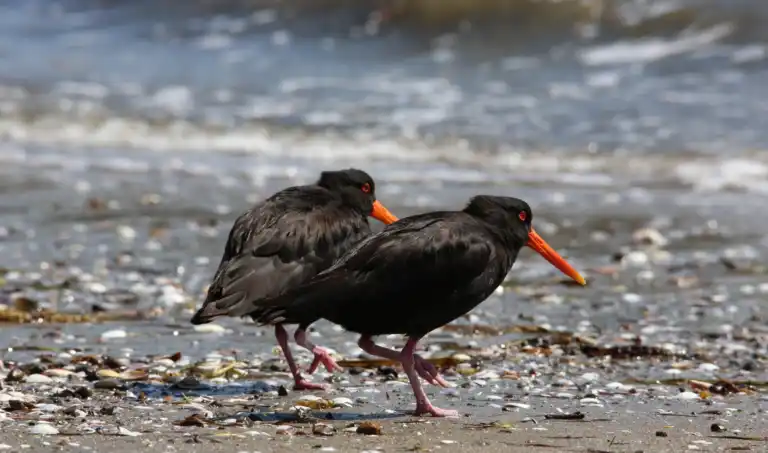
The variable oystercatcher is a stocky coastal bird with a long, bright orange bill, it is located on many quiet beaches such as Blackpool, Whakanewha and Anzac bay.
The Kaka is a large, olive-brown parrot with grey-white crown, red-orange underwing and deep crimson belly, located in tree covered areas around Onetangi.
The Tui is a iridescent blue-green honeyeater with two curled white feather tufts on the throat. Locations found on Waiheke are around flaxes feeding off nectar.
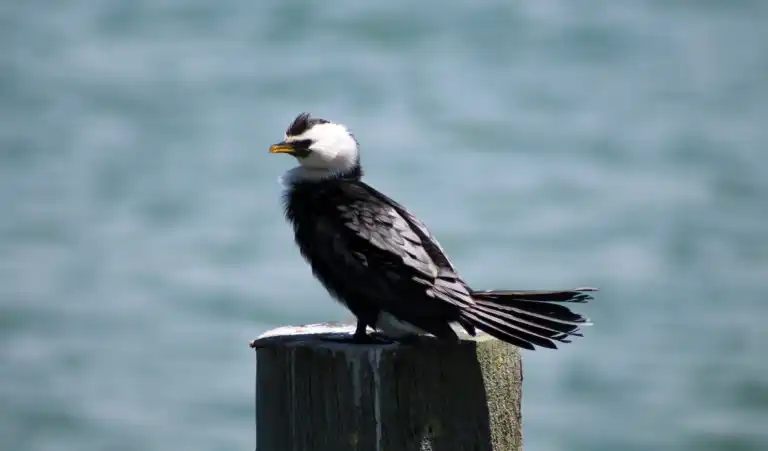
The little shag is a small shag, with a short yellow bill, black feet, a relatively long tail, usually spotted in the ocean searching for food or hanging around Waiheke…
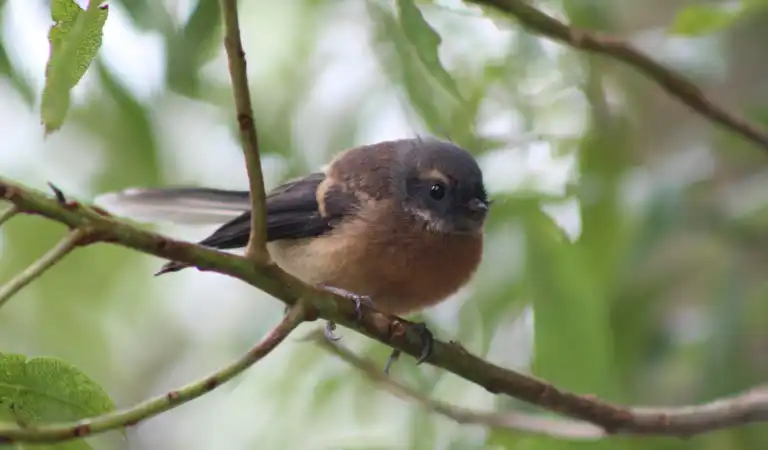
The Fantail is a well known NZ bird due to its distinctive fanned tail. Locations found on Waiheke are any well-treed parks, bush walks and even properties.
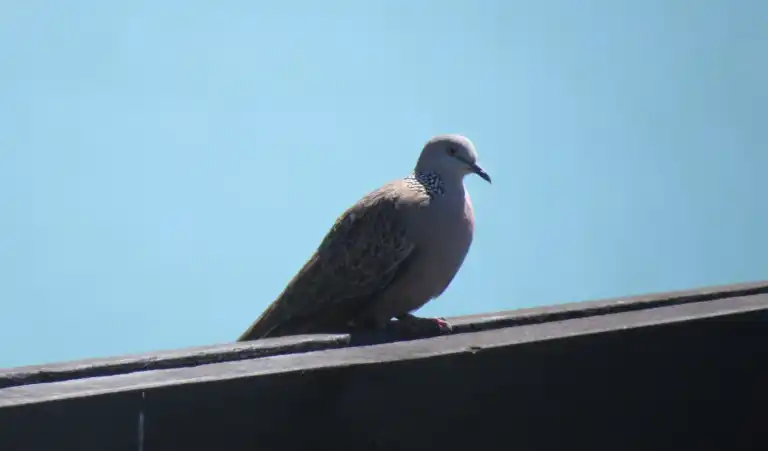
The spotted dove is a medium-sized, long-tailed dove, with a greyish head and speckled greyish brown upperparts. Found on Waiheke around gardens and the rooster reserve.
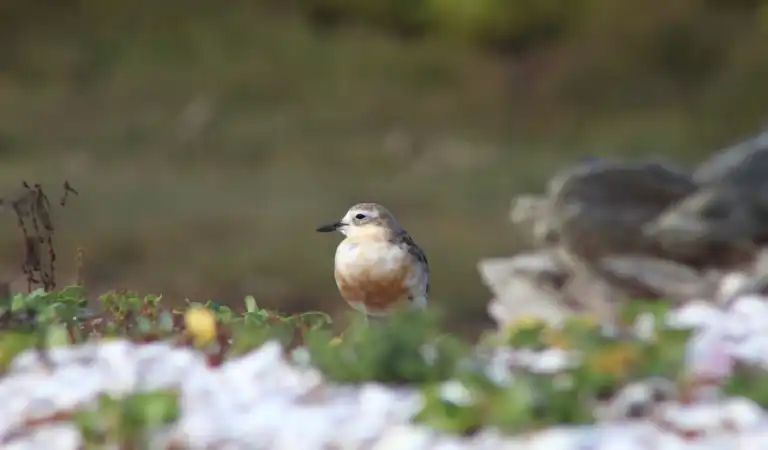
The New Zealand Dotterel is a shorebird which breeds on beaches in NZ's North Island. Locations found on Waiheke are Whakanewha, Anzac Bay and Blackpool.
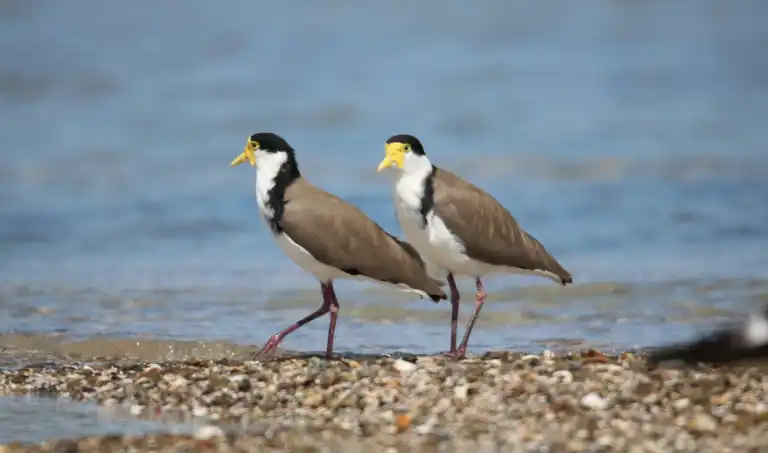
The Spur-winged plover is a large stocky wader with a yellow bill and spurs on each wing, locations found on Waiheke are Blackpool, Maori hill and Whakanewha.
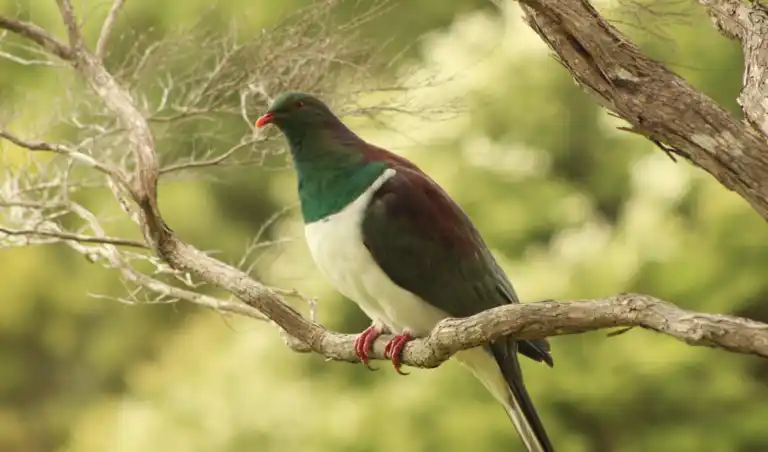
The Wood pigeon is a large distinctively-coloured pigeon, it is easy to find on Waiheke due to its size, they are usually perched on powerlines or trees.
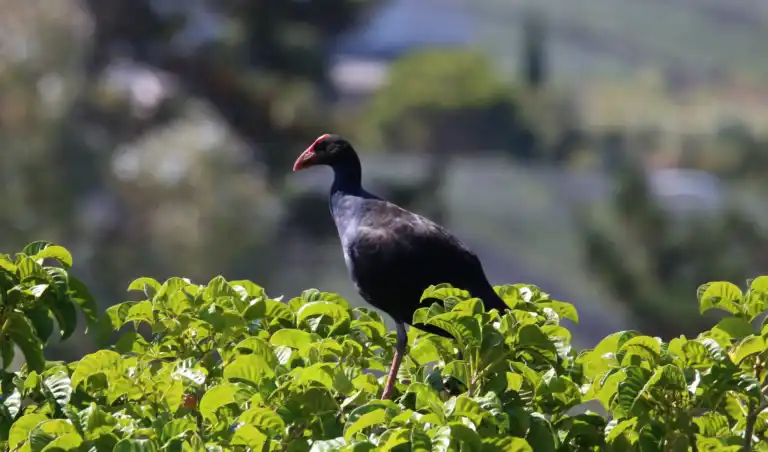
The Pukeko is a large relatively compact rail with a deep blue-violet head, breast and throat and a red bill. Found in swamp/Mangrove areas of Waiheke Island.
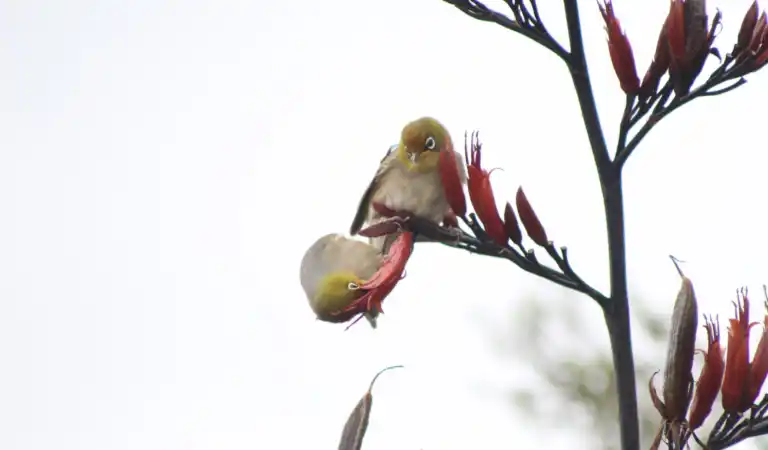
A small songbird, immediately recognisable by its distinctive white eye-ring. This quick little bird can be found feeding off flax and kowhais or fruit trees on Waiheke.
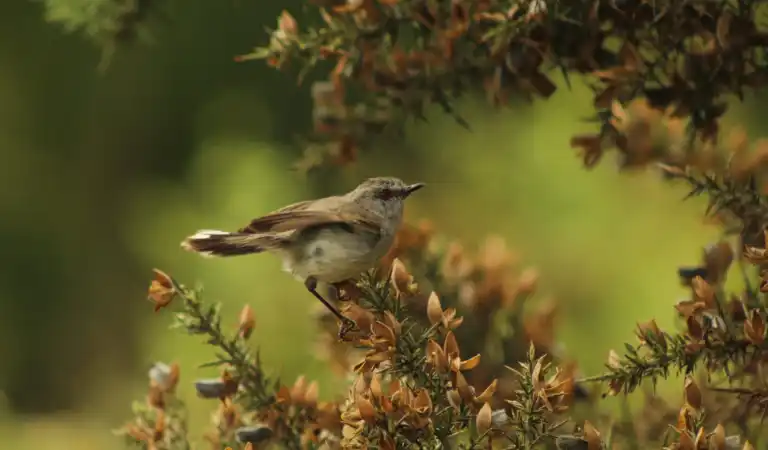
The Grey Warbler is a tiny olive-grey song bird often heard before seen. Locations on Waiheke are dense woody vegetations. The warbler can be difficult to spot.
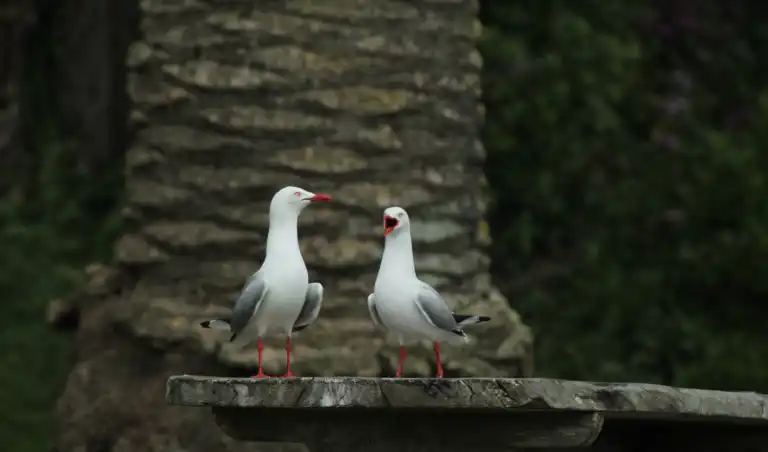
The red-billed gull also known as a "Seagull" is common around New Zealand Coasts. Located everywhere on Waiheke beaches where food or bait is readily accessible.
Breeding
Eggs are laid from September to January.
The nest, built by the female, is a rough bulky structure of twigs and sticks, lined with fine grasses, high in the canopy or subcanopy.
The clutch is 2-4 white or pale pink eggs, marked with reddish-brown spots and blotches.
Chicks are initially fed only by the female, but later the male helps to feed them.
Food
Tūī diet varies depending on the seasonal availability of nectar and fruits.
Their preferred diet is nectar and honeydew, and they will often shift to, or commute daily or more frequently to, good nectar sources, such as stands of puriri, kowhai, fuchsia, rewarewa, flax, rata, pohutukawa, gums and banksias.
In the breeding season, tūī supplement their nectar diet with large invertebrates such as cicadas and stick insects
In the autumn, medium-sized fruit such as wineberry, kaikomako, mahoe, ngaio, rimu or kahikatea, make up much of the diet.
In winter, flowering gums, banksias, puriri, and tree lucerne are important nectar sources, along with sugar-water feeders in gardens.
Waiheke Locations
Tenax Flaxes Bushes – They feed on the nectar when large flaxes (Tenax) are flowering, there is a abundance of flaxes on Waiheke.
Birds of Paradise Flowers – When flowering they feed of the nectar.
Kowhai, Pohutukawa’s and Puriri Trees – Waiheke has an abundance of Native trees near road sides, beach sides and Reserves.
Waiheke Properties – Many Waiheke residents leave out sugar water for birds and bees to feed on.
How to make sugar water is simply mix up a sugar solution by dissolving 100g (approx.½ cup) of white sugar in 1 litre of warm water. Once that has cooled down pour into the feeder and hang in a tree.
Tui’s are flying birds so they can really be anywhere on Waiheke but not just Waiheke they are all over New Zealand, these are just areas I’ve spotted them and photographed.
Waiheke honey is a local honey business that offers organic and unpasteurized honey. They have a range of different size jars and a few types of honey to choose from.
Little Palm also known as “Nudie Beach” is a nudist beach located on the western side of Palm Beach. It is Waihekes only beach where its safe to swim and sunbathe naked.
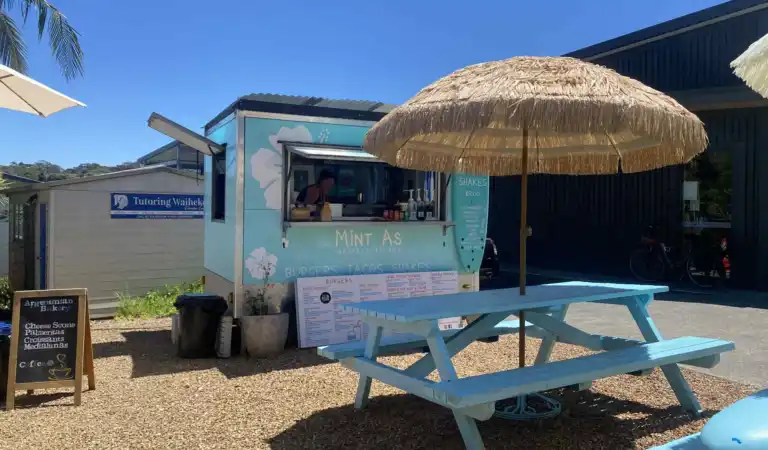
Mint As is a popular burger cart located in Ostend, next to RAW fruit and vege, they serve juicy burgers, taco’s and milkshakes all made while you wait.
Red Crab Waiheke is the perfect place to go. Being the only Thai restaurant on Waiheke it is a popular place to eat at, experience the taste of Salty, sweet, sour and spicy.