Magpie

Scientific Name Gymnorhina tibicen
Native No
Family Artamidae
Common Weight 350 Grams
Common Height 19 CM
Common Length 37 CM

Identification

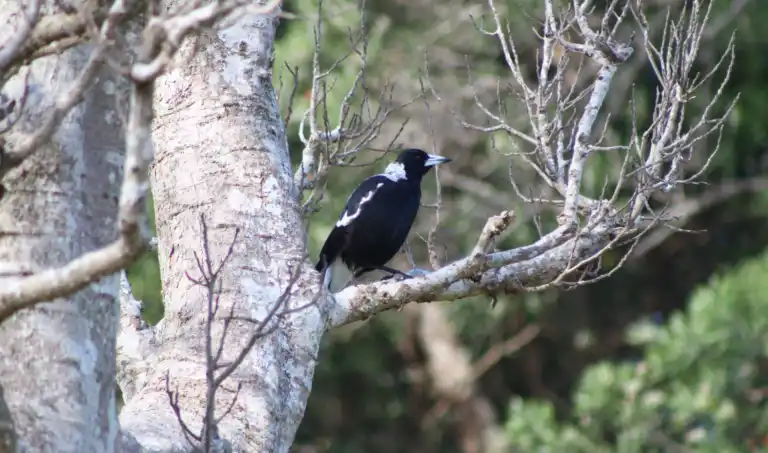
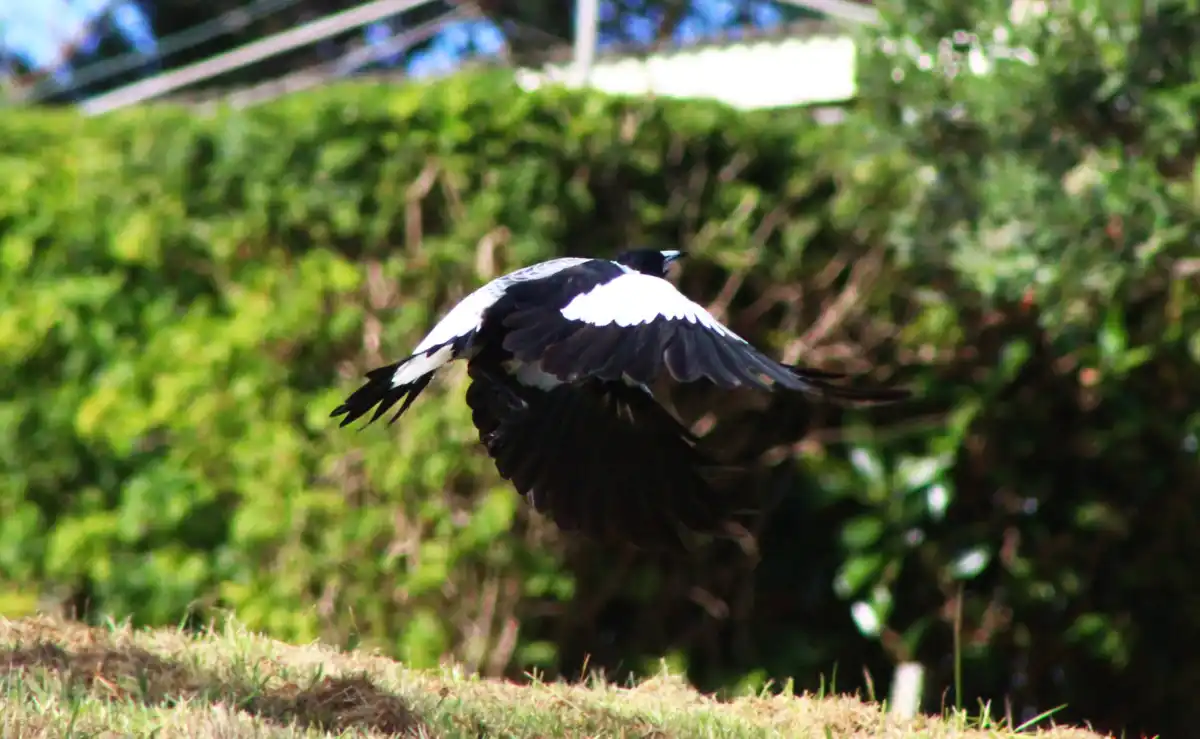
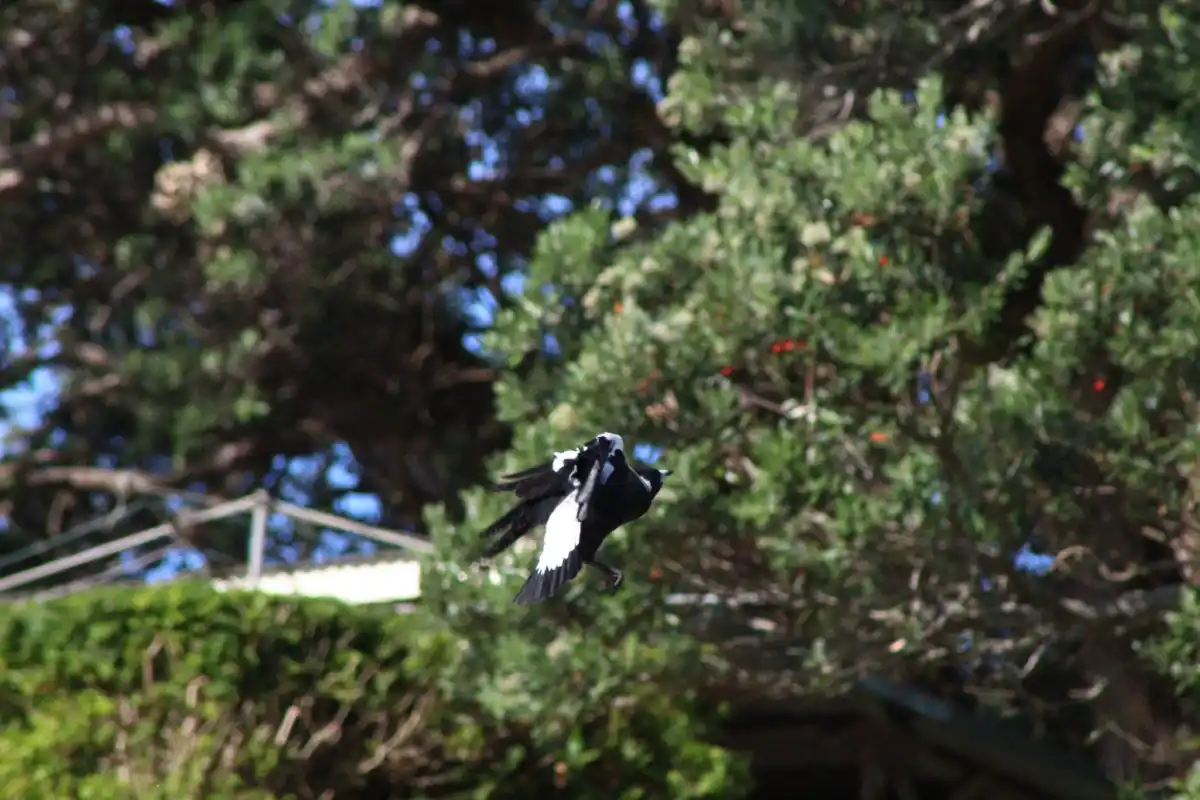
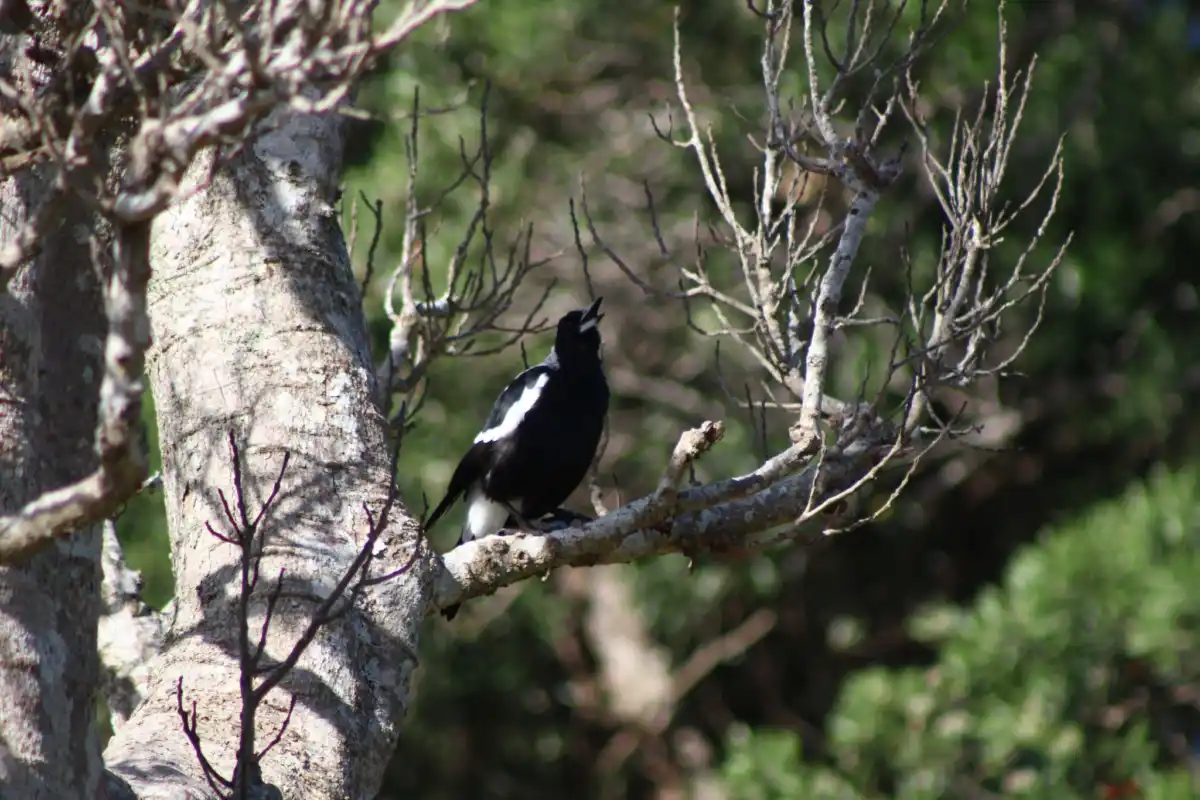
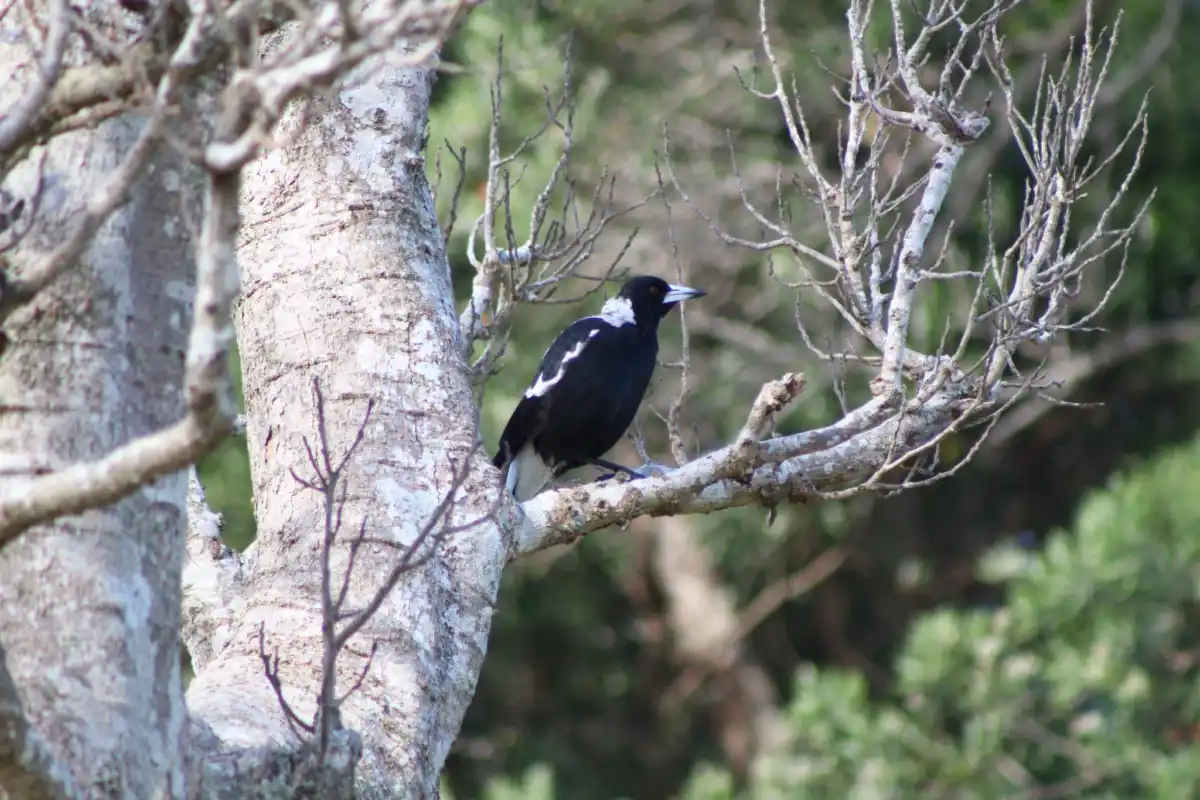
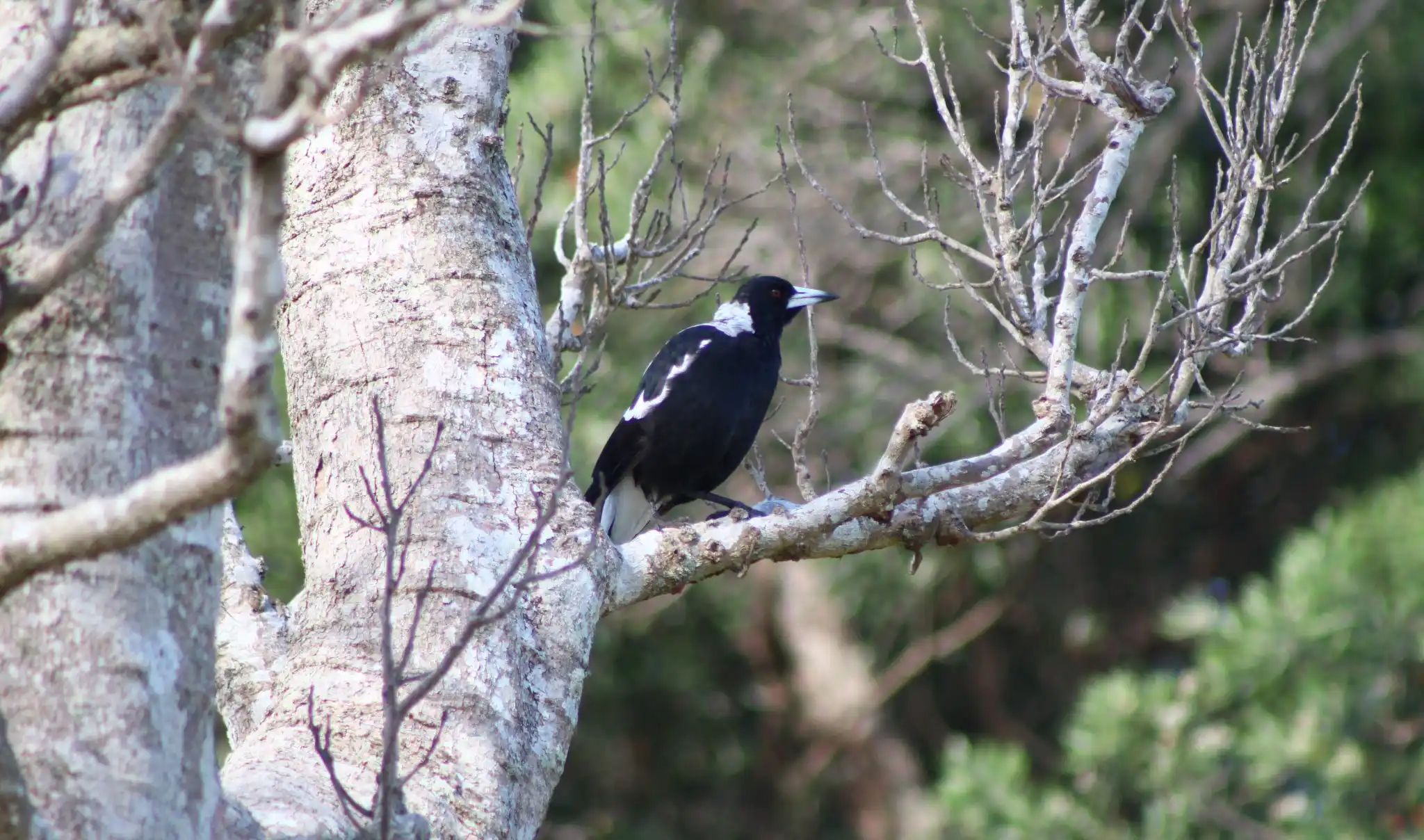
The Magpie is a large black-and-white songbird, It was introduced from Australia. It can be found on Waiheke around farmland and large grass reserves.

This familiar large songbird is similar in size to a crow or a New Zealand pigeon. The white-backed form tyrannica is the largest of the sub-species. 

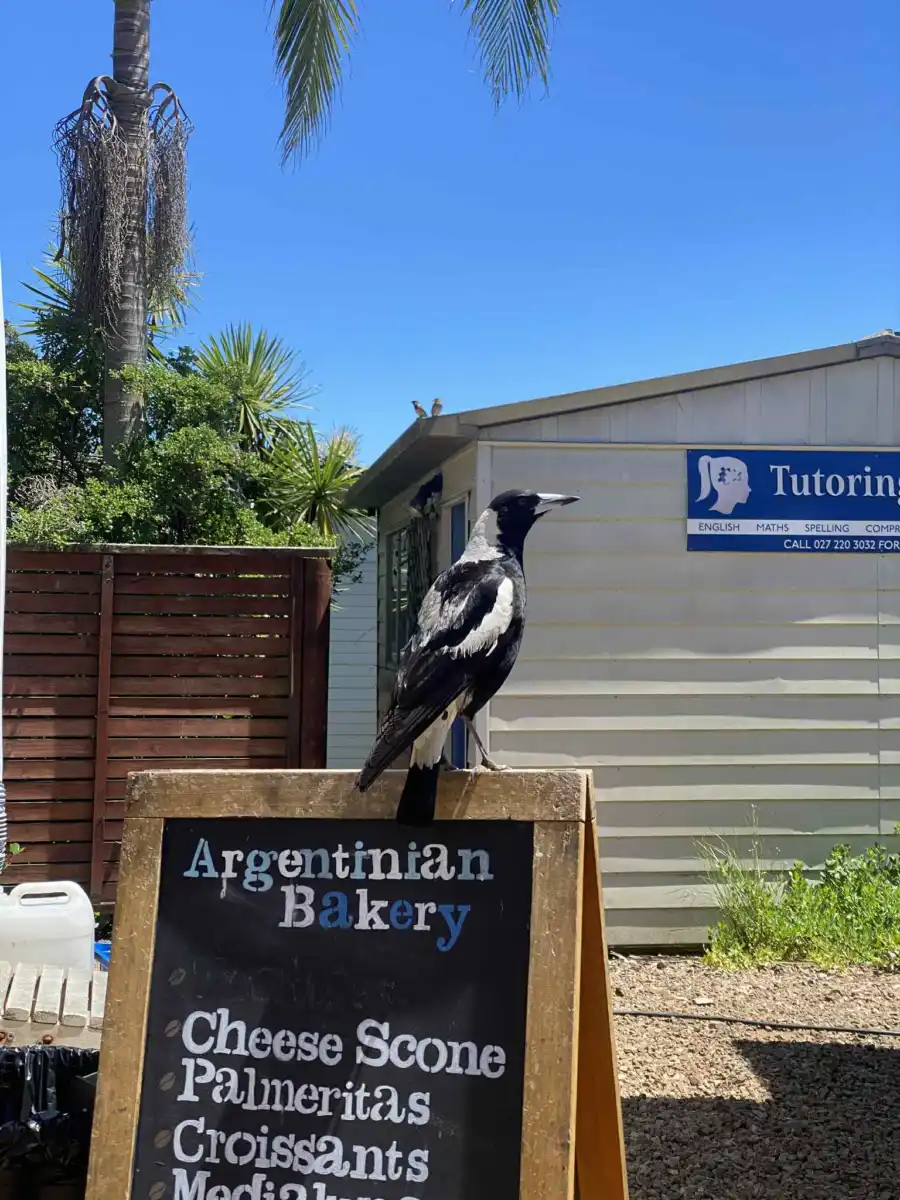
The male has a white hind-neck, mantle, rump and shoulder patches. The upper two-thirds of the tail and under-tail coverts are also white. The rest of the plumage is black, with a blue iridescence. The female is similar, but the mantle is grey, and the black parts of the plumage are less iridescent. Both sexes have a blue-grey bill with a dark tip, and red eyes.

The male takes several years to attain full adult plumage; after the second moult it resembles an adult female. Some white appears on the mantle after the third moult, and the remainder after the fourth moult. The juvenile is mottled grey on the under-surface. 

The black-backed magpie is similar to the white-backed forms, but with a black mantle. The female can be identified by the presence of some grey on the lower hind-neck. The two subspecies interbreed, resulting in offspring with a varying amount of black on the mantle, ranging from a few feathers to a narrow band.

The Australian magpie has been widely implicated in the predation of native birds and their nests. However, magpies do occasionally kill other birds, mostly smaller species.

Magpies are well-known for their propensity for attacking people by dive-bombing during the breeding season. However, this usually only lasts until shortly after the chicks fledge.
Waiheke Wildlife

Pūkeko

Pūkeko

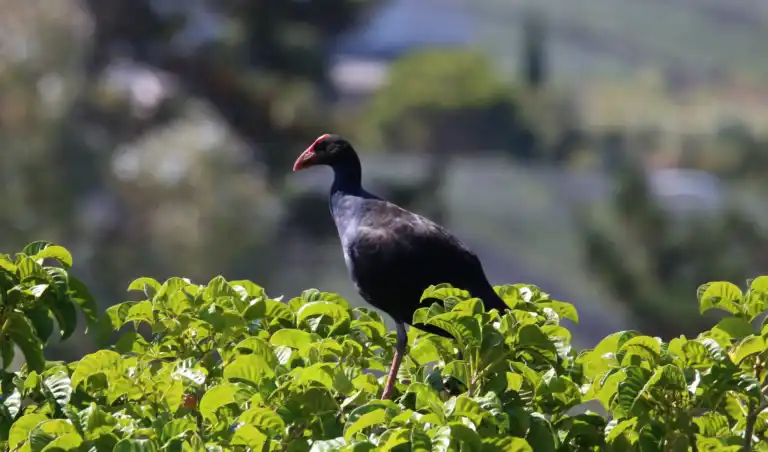
The Pukeko is a large relatively compact rail with a deep blue-violet head, breast and throat and a red bill. Found in swamp/Mangrove areas of Waiheke Island.
NZ Dotterel

NZ Dotterel

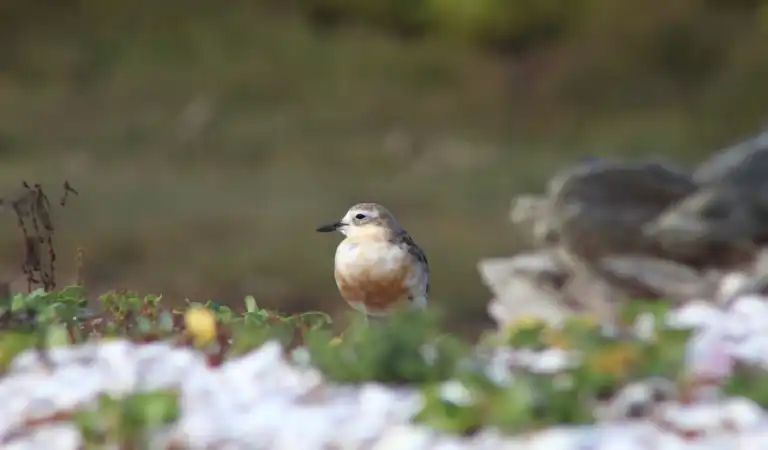
The New Zealand Dotterel is a shorebird which breeds on beaches in NZ's North Island. Locations found on Waiheke are Whakanewha, Anzac Bay and Blackpool.
Wood Pigeon

Wood Pigeon

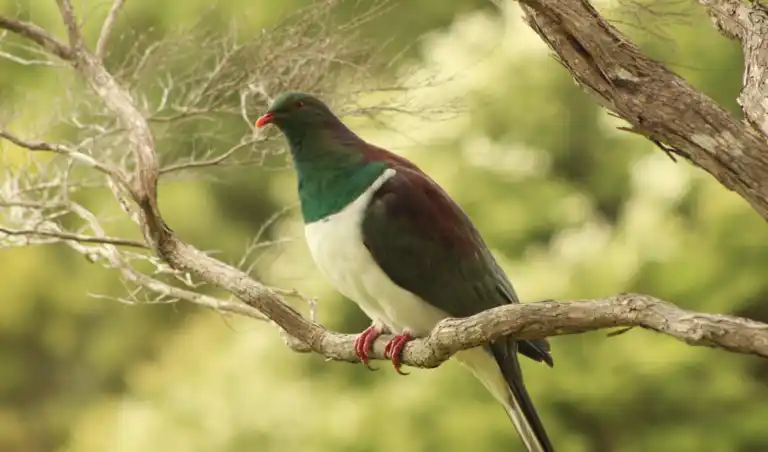
The Wood pigeon is a large distinctively-coloured pigeon, it is easy to find on Waiheke due to its size, they are usually perched on powerlines or trees.
Grey Warbler

Grey Warbler

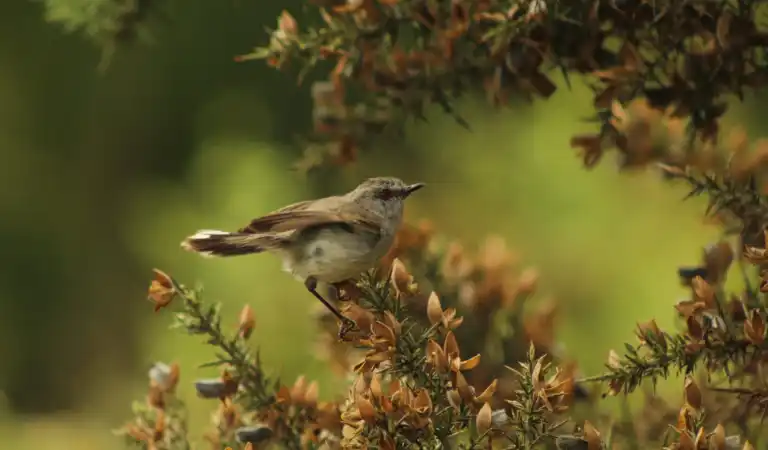
The Grey Warbler is a tiny olive-grey song bird often heard before seen. Locations on Waiheke are dense woody vegetations. The warbler can be difficult to spot.
Fantail

Fantail

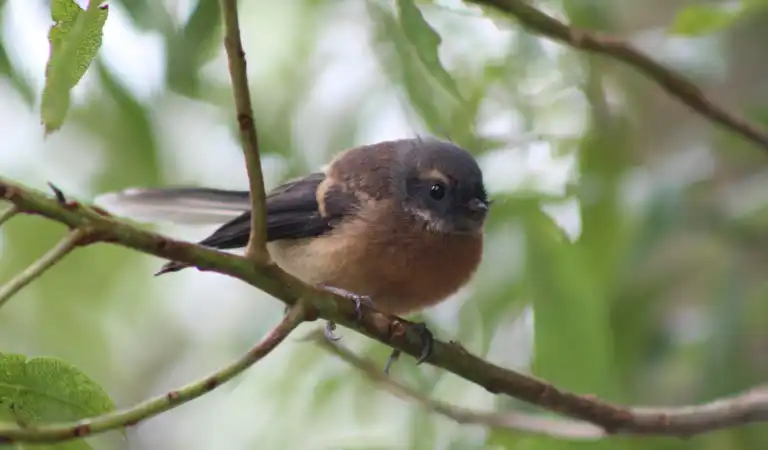
The Fantail is a well known NZ bird due to its distinctive fanned tail. Locations found on Waiheke are any well-treed parks, bush walks and even properties.
Common Myna

Common Myna

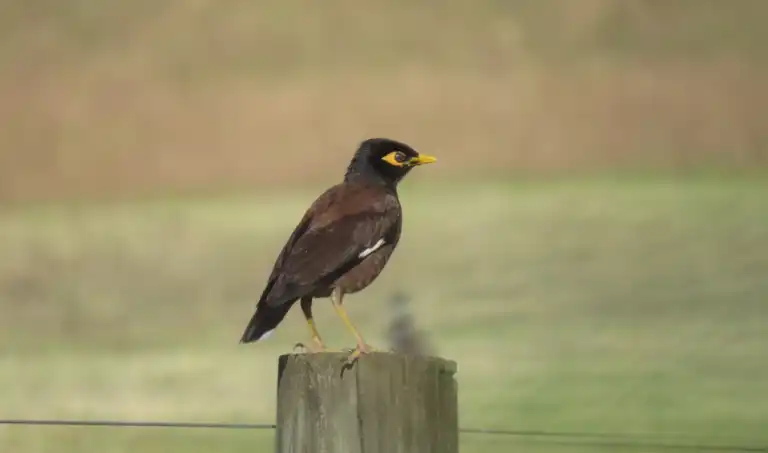
Mynas are stocky brown birds with a shiny black head and shoulders. Commonly found on road sides on Waiheke, usually playing chicken with cars while foraging for food.
Sacred Kingfisher

Sacred Kingfisher

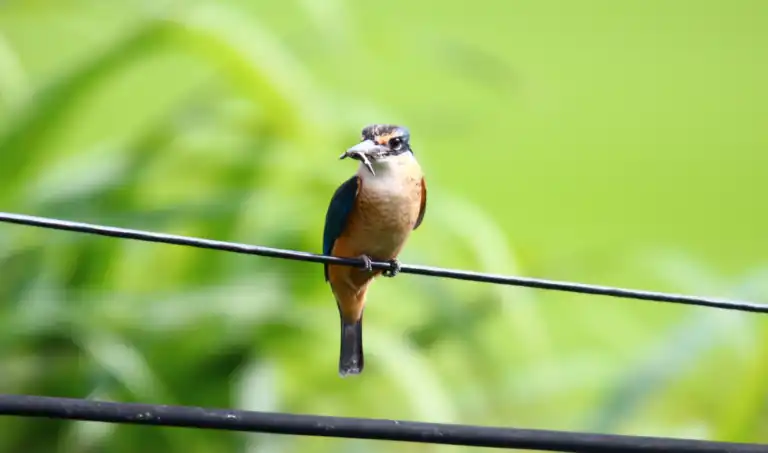
The sacred kingfisher is a distinctive bird with a green-blue back, buff to yellow undersides and a large black bill. they can be found nearby tidal beaches on waiheke.
Spotted Turtle Dove

Spotted Turtle Dove

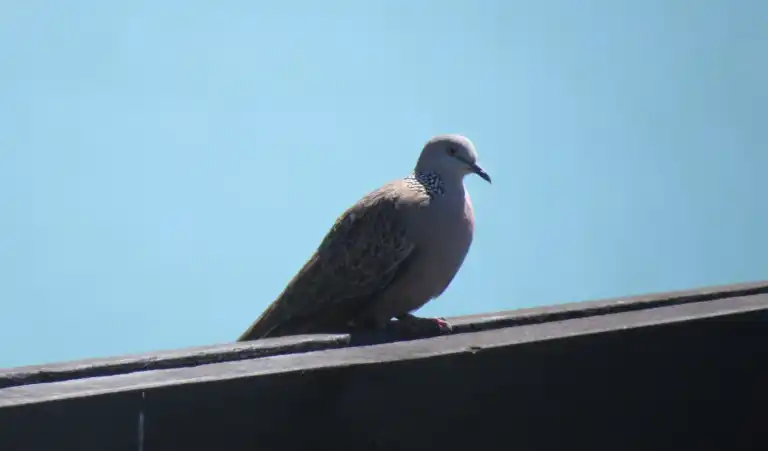
The spotted dove is a medium-sized, long-tailed dove, with a greyish head and speckled greyish brown upperparts. Found on Waiheke around gardens and the rooster reserve.
White-Eye

White-Eye

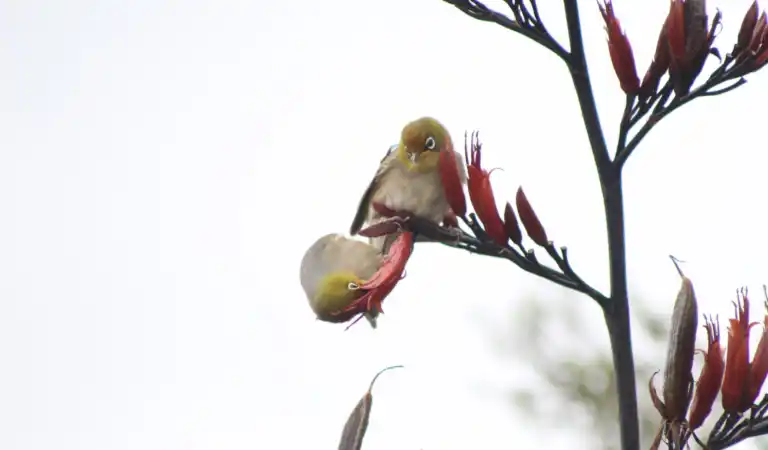
A small songbird, immediately recognisable by its distinctive white eye-ring. This quick little bird can be found feeding off flax and kowhais or fruit trees on Waiheke.
Red Billed Gull

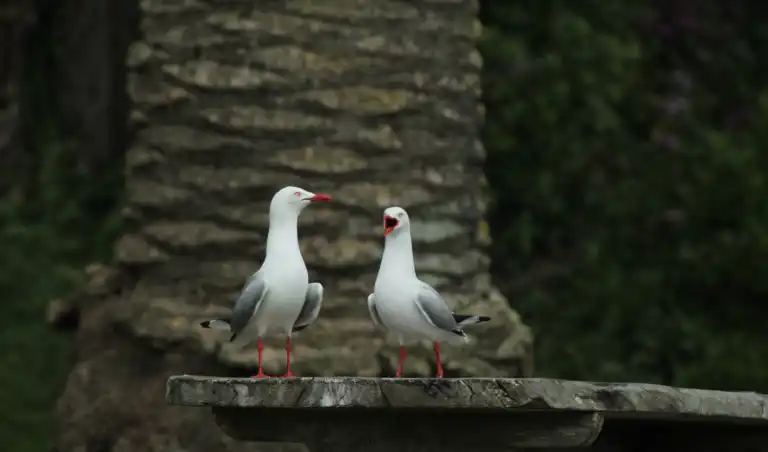
Red Billed Gull

The red-billed gull also known as a "Seagull" is common around New Zealand Coasts. Located everywhere on Waiheke beaches where food or bait is readily accessible.
Variable Oyster Catcher

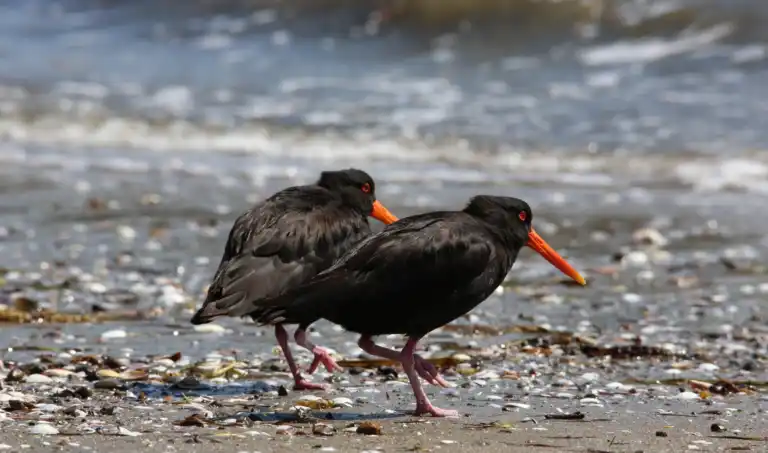
Variable Oyster Catcher

The variable oystercatcher is a stocky coastal bird with a long, bright orange bill, it is located on many quiet beaches such as Blackpool, Whakanewha and Anzac bay.
Pied Stilt

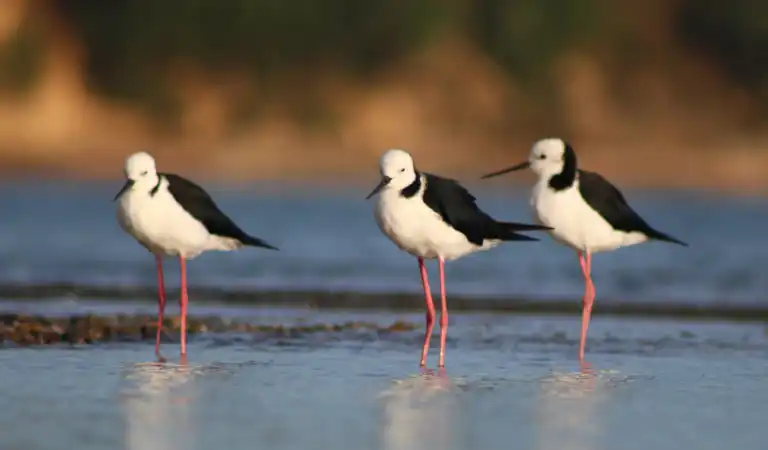
Pied Stilt

The pied stilt is a dainty wading bird, It is common at wetlands and coastal areas, found on Waiheke at Putiki Bay, Anzac Bay and Blackpool.
White Faced Heron

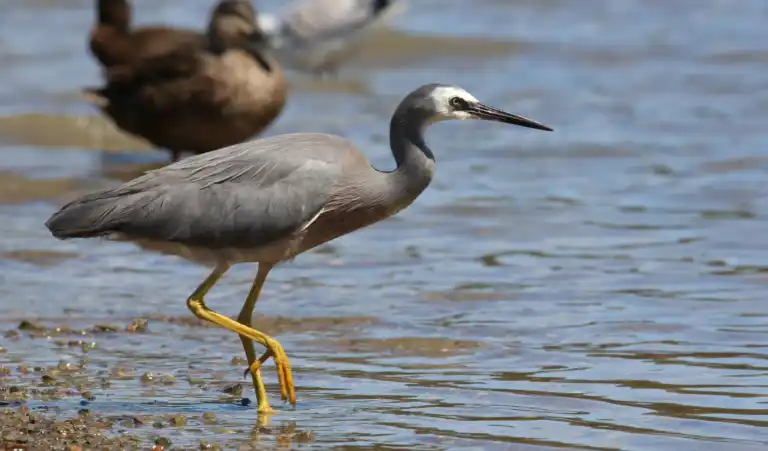
White Faced Heron

The white-faced heron is a tall, elegant, blue-grey bird usually spotted stalking prey. Locations found on Waiheke are Mangroves, Anzac bay and quiet beaches.
Little Shag

Little Shag

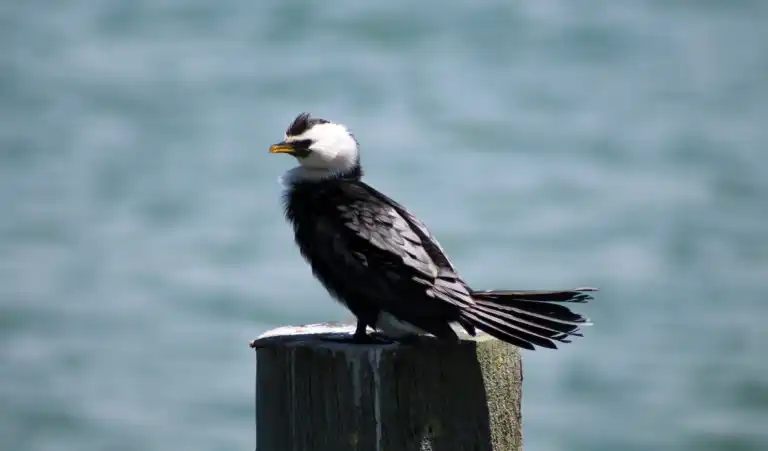
The little shag is a small shag, with a short yellow bill, black feet, a relatively long tail, usually spotted in the ocean searching for food or hanging around Waiheke…
Black Bird

Black Bird

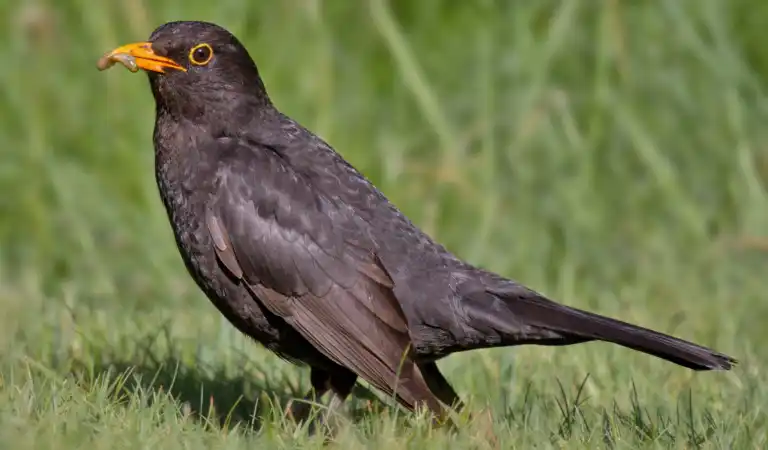
The black bird is a medium-sized songbird that is entirely black in adult males with a yellow bill. Abundantly found on Waiheke around household properties and trees.
Spur-winged Plover

Spur-winged Plover

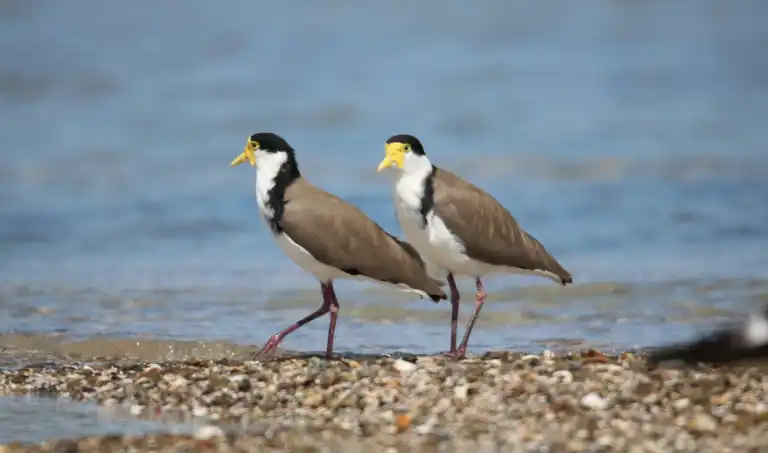
The Spur-winged plover is a large stocky wader with a yellow bill and spurs on each wing, locations found on Waiheke are Blackpool, Maori hill and Whakanewha.
White Fronted Tern

White Fronted Tern

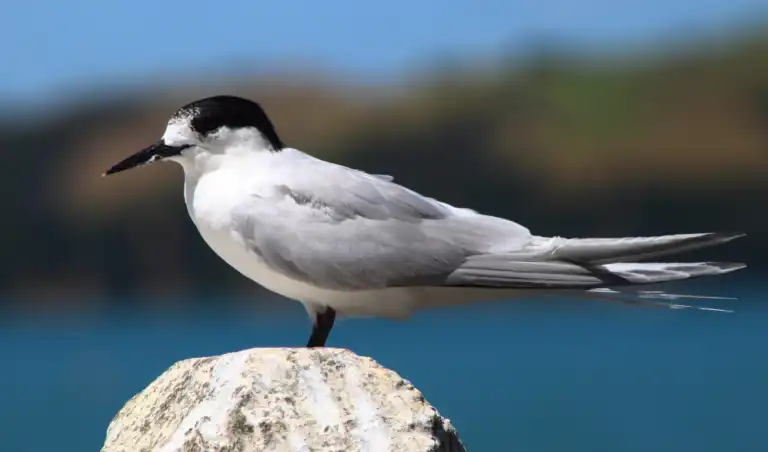
The white-fronted tern is a medium-sized, long-tailed sea tern commonly around New Zealand coasts. Spotted congregating on Waiheke wharfs such as Matiatia and Orapiu.
Welcome Swallow

Welcome Swallow

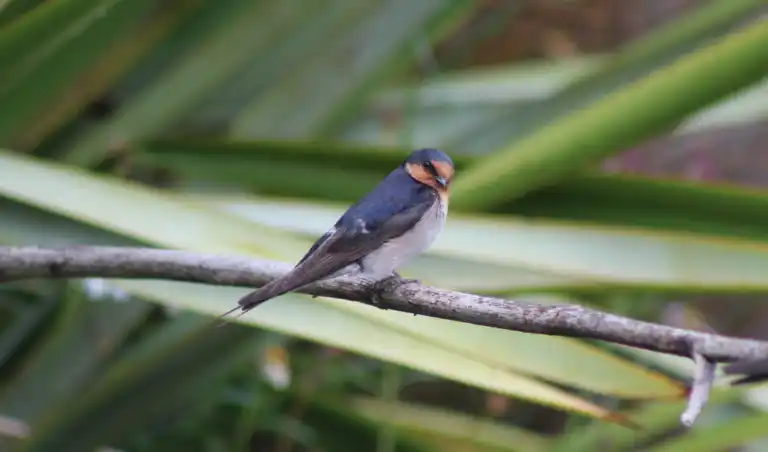
Welcome swallows are small fast-flying birds, they are usually seen around waiheke during breeding season between August and February on powerlines, fences and beaches.
Kaka

Kaka

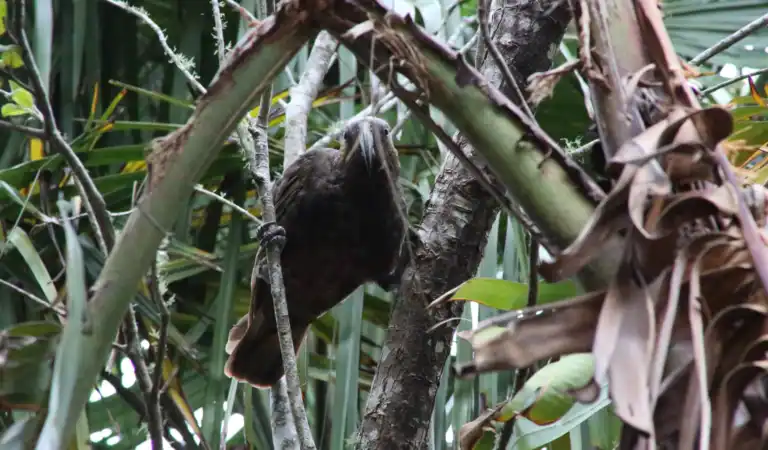
The Kaka is a large, olive-brown parrot with grey-white crown, red-orange underwing and deep crimson belly, located in tree covered areas around Onetangi.
Great black-backed gull

Great black-backed gull

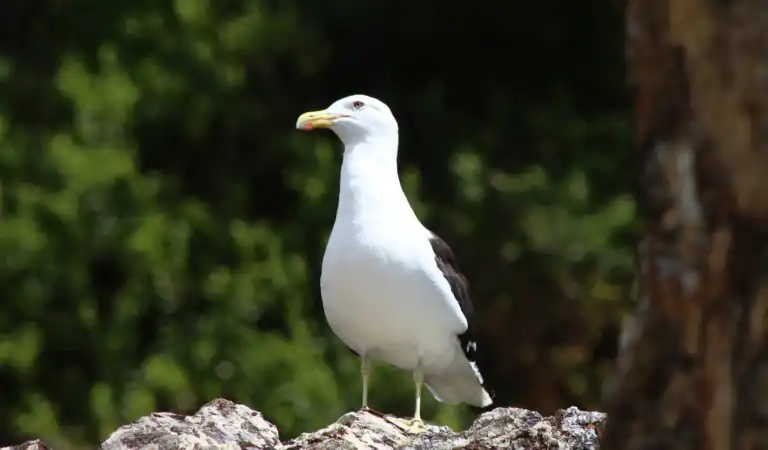
The Black-backed gull is a large black-and-white gull with a white head and underparts, black back, yellow bill with a red spot near the tip. Located on Waiheke beaches.
Australasian Gannet

Australasian Gannet

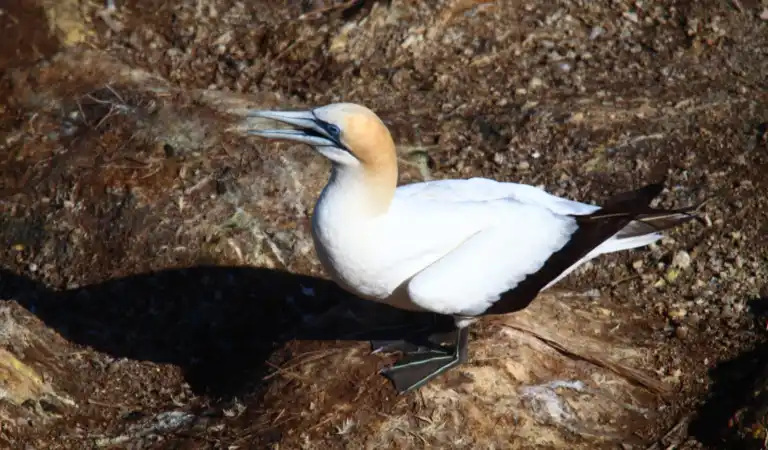
The gannet is a large slender-bodied seabird with mainly white plumage, buff-yellow head and neck. Occassionally seen around Waiheke searching for food in ocean depths.
Magpie

Magpie

The Magpie is a large black-and-white songbird, It was introduced from Australia. It can be found on Waiheke around farmland and large grass reserves.
Tui

Tui

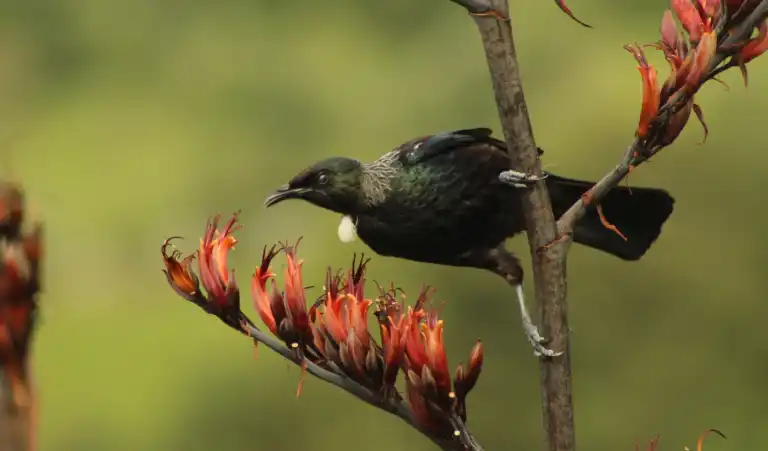
The Tui is a iridescent blue-green honeyeater with two curled white feather tufts on the throat. Locations found on Waiheke are around flaxes feeding off nectar.
Thrush

Thrush

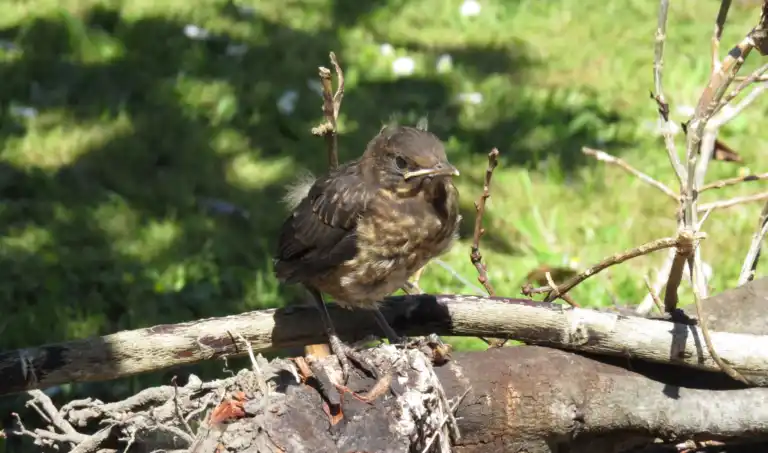
The thrush is a medium-sized songbird with a speckled brown-on-cream breast, usually heard before it is seen, found in grass reserves, gardens and trees on Waiheke.
Bar-tailed Godwit

Bar-tailed Godwit

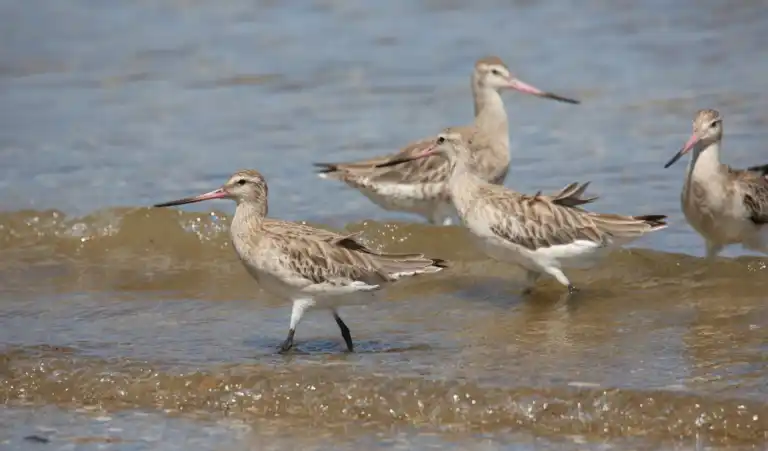
The Godwit is a migrant from Alaska, they fly 8-9 days straight to arrive in NZ. They can be found on Waiheke from September - March located at Blackpool.
Pied Shag

Pied Shag

This large black-and-white shag is often seen individually or in a group, usually spotted in the ocean searching for food or hanging around fisherman by the rocks of Waiheke.

Breeding

Magpies breed early, commencing nest-building in late July, and are normally single brooded.

The bulky nest is built of twigs, roots, and man-made materials including wire, and lined with hair and wool. Usually located in the crown or side-branches of tall trees, especially pines, macrocarpas and gums. Native trees such as tawa and beech are also frequently used.

The usual clutch consists of 3-4 eggs, and the resulting chicks are fed by both parents for 4-5 weeks until fledging. 

Eggs are highly variable; ground colour various shades of grey, green, brown or blue or combinations of these colours. Marked with spots, streaks, blotches, smudges and hair-lines of various shades or brown or black. Can be unmarked.

Food

Australian magpies mainly feed on invertebrates, taken mostly from the ground. A large proportion of the diet consists of earthworms in winter, but at other times of the year they feed mainly on insects, including pest species. 

They particularly favour the caterpillars of the porina moth, which are extracted from their tunnels in the ground. Other invertebrates eaten include army worm caterpillars, crickets, wasps, spiders, stick insects and snails. In late summer magpies frequently feed on large cicadas when these are available.

Occasionally magpies consume beetles ,lizards, mice, small birds and their eggs and chicks. Seeds and grain may be taken occasionally.

Waiheke Locations

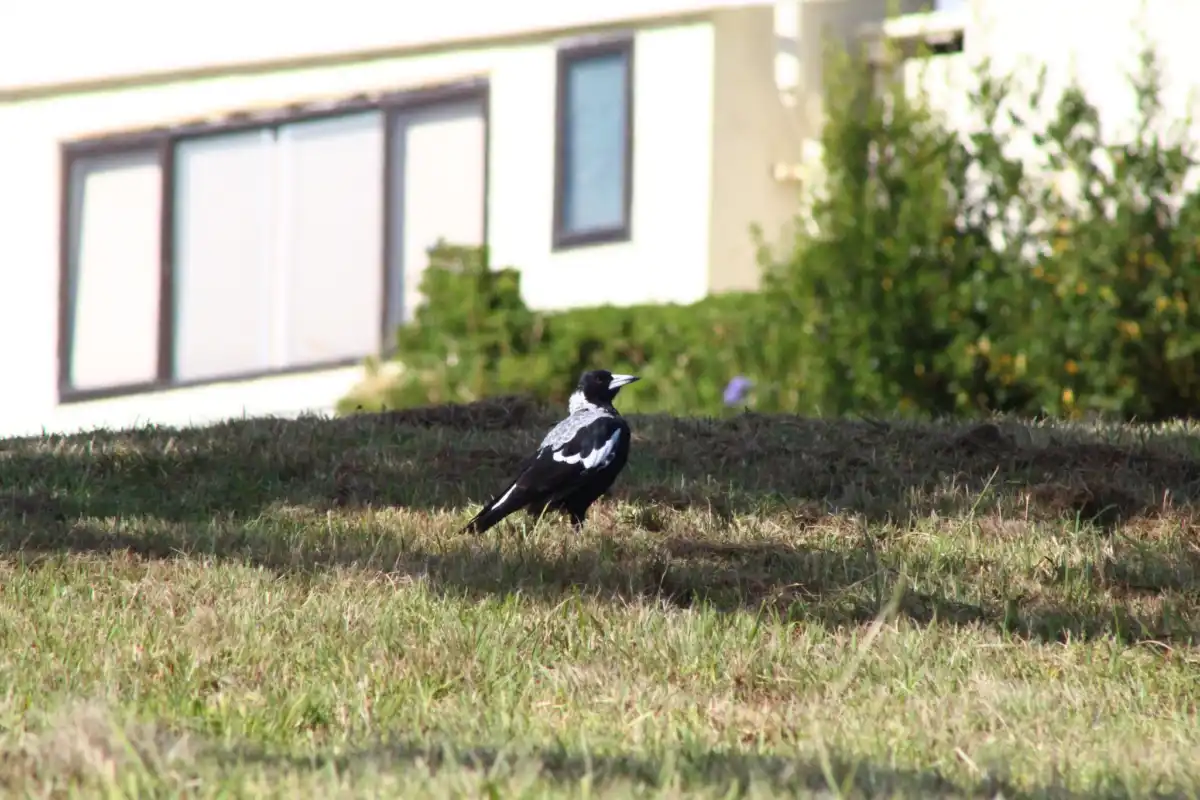
Waiheke Grass Reserves – I have spotted the magpie searching for food by the Onetangi reserve, they are also sometimes spotted swooping at hawks when they get to close.

Farm land Waiheke – spotted searching for food and perching on fences in Orapiu, Church Bay areas.

The Magpie are flying birds so they can really be anywhere on Waiheke but not just Waiheke they are all over New Zealand, these are just areas I’ve spotted them and photographed.

References

https://www.nzbirdsonline.org.nz/ (Website used for journalistic purposes)

Gallery
Featured Pages