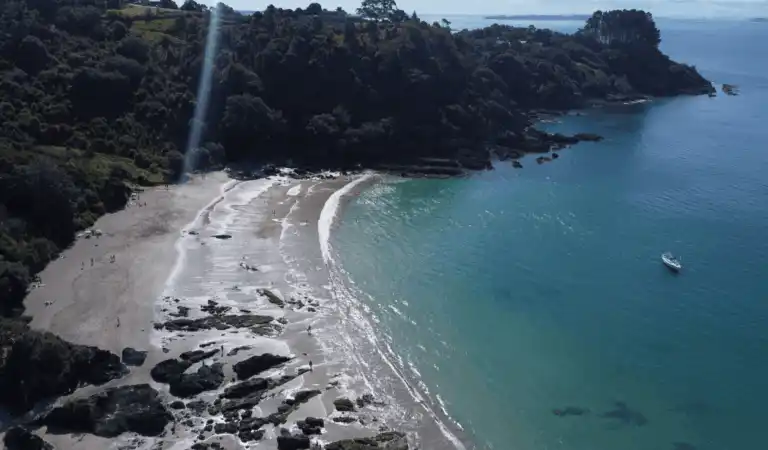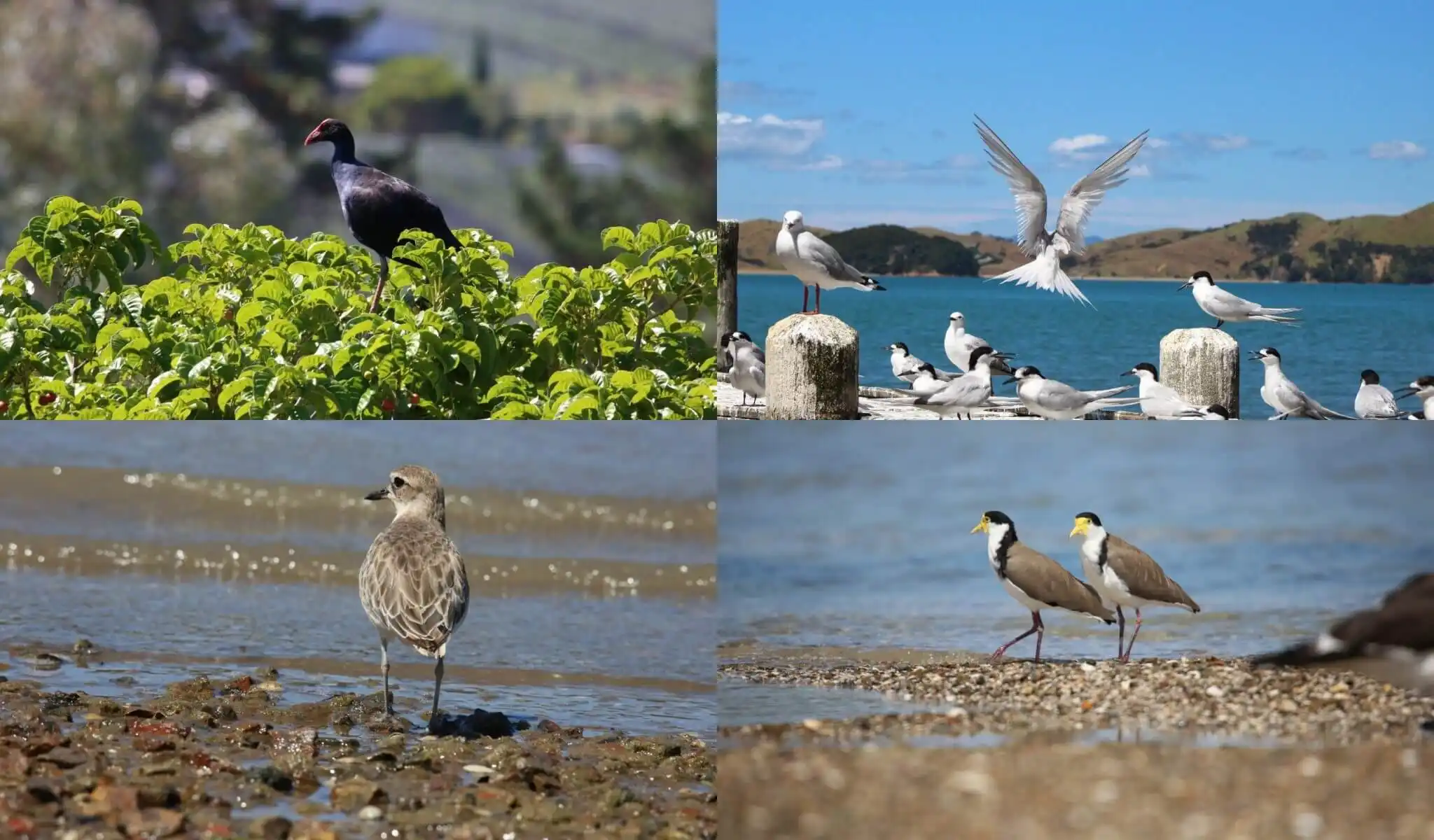
The key animal types on and around Waiheke are birds, geckos, livestock, pets and marine life, with the addition of the North Island brown kiwi in 2025!
You also have the ability to feed sharks close to the rocks at Matiatia, and potentially even see dolphins or whales from the coast.
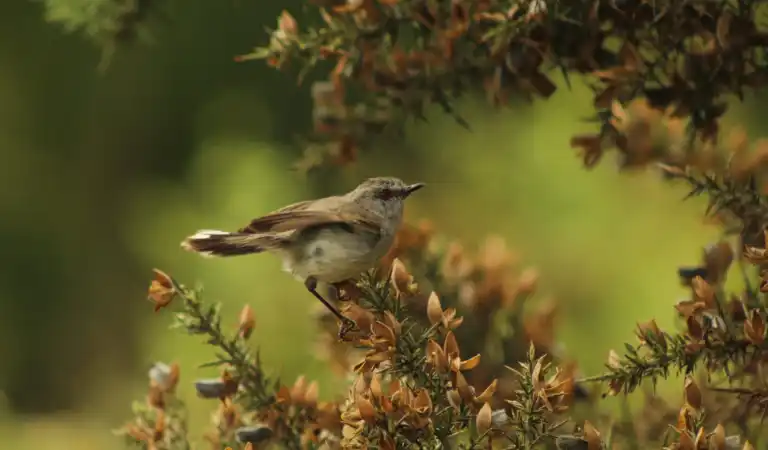
Grey Warbler
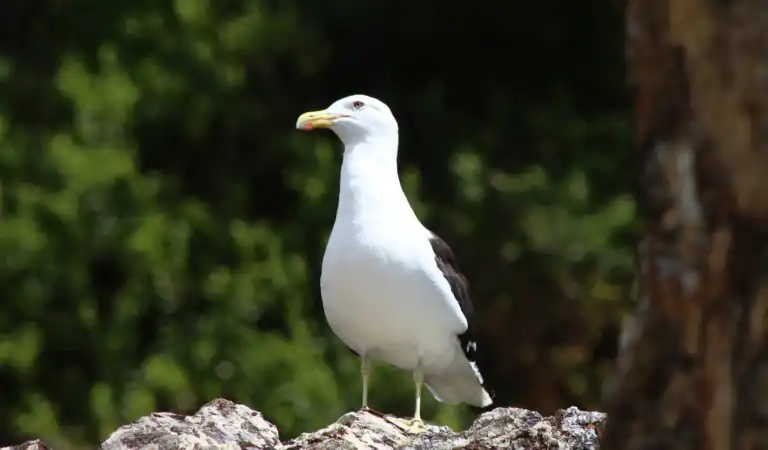
Great black-backed gull
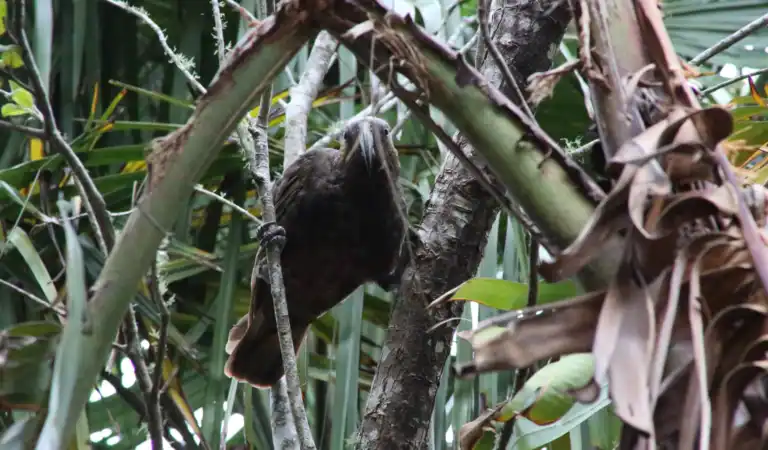
Kaka
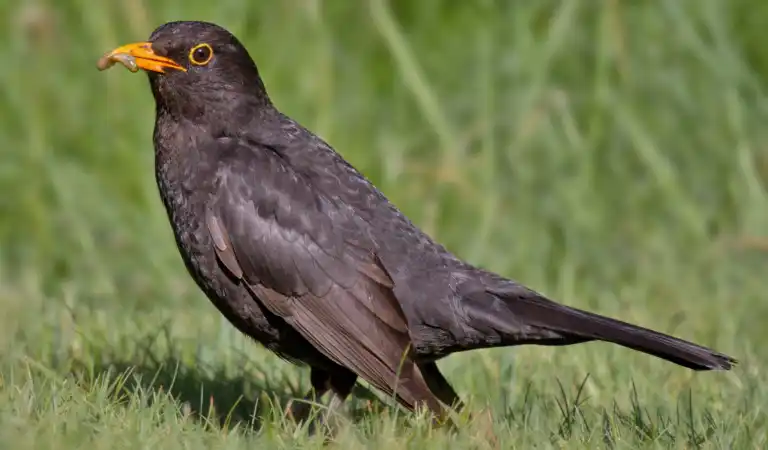
Black Bird
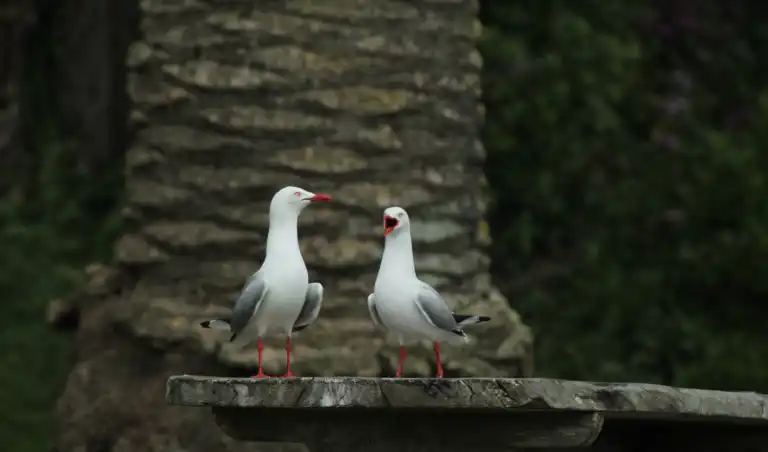
Red Billed Gull
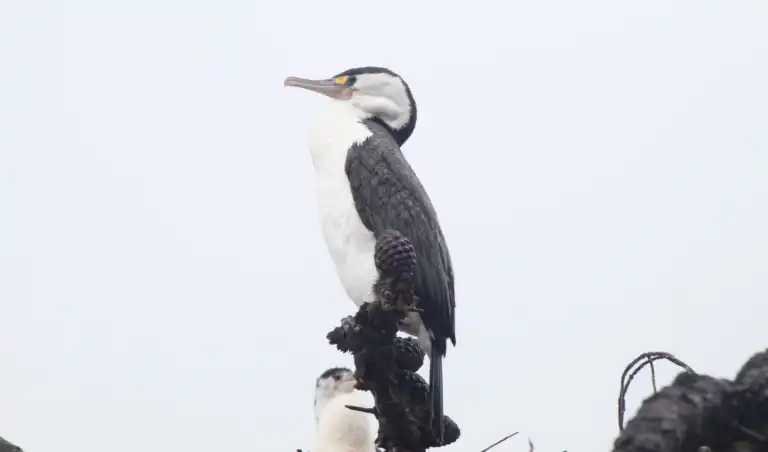
Pied Shag
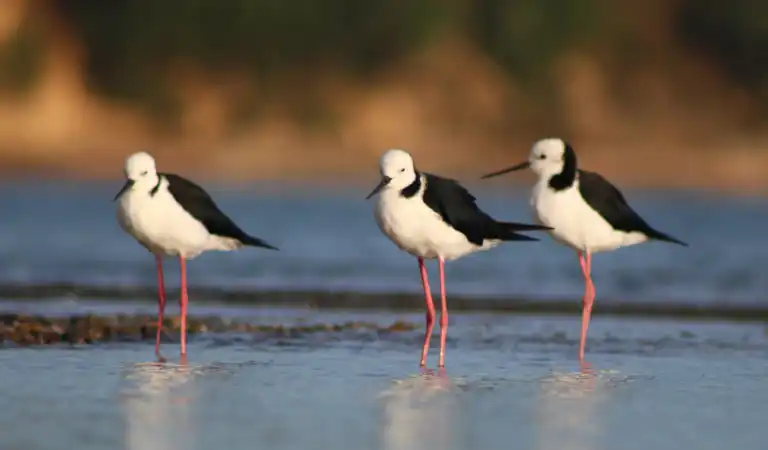
Pied Stilt
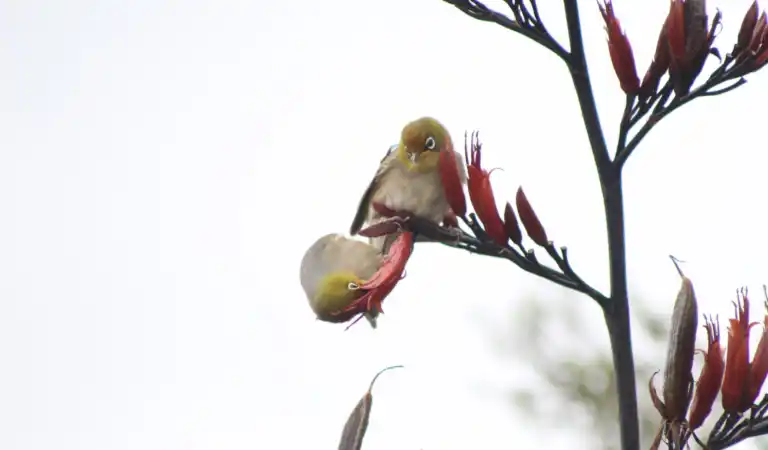
White-Eye
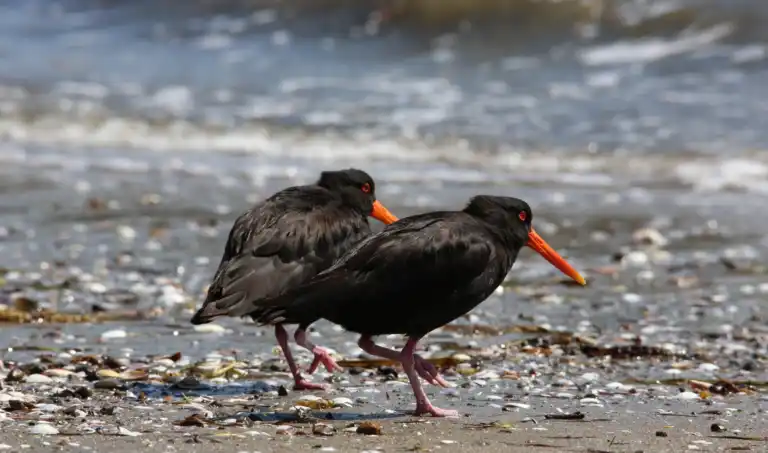
Variable Oyster Catcher
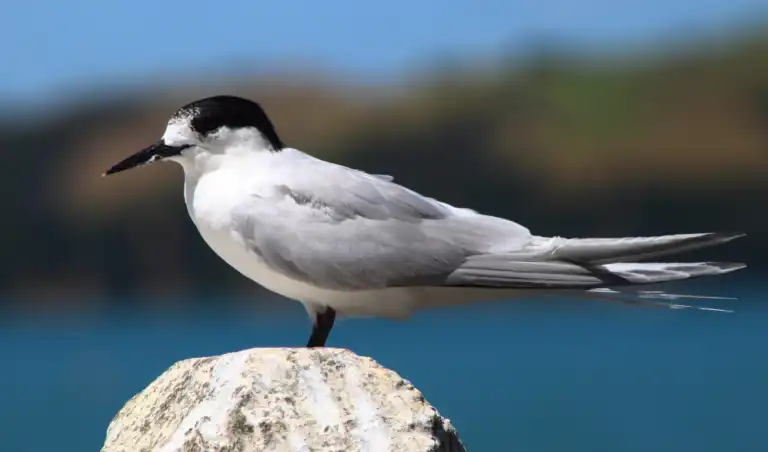
White Fronted Tern
Wood pigeon – Also known as kereru, this is a large, distinctively-coloured pigeon. It is easy to find on Waiheke due to its size, and is usually seen perched on powerlines or trees.
Tui – An iridescent blue-green honeyeater with two curled white feather tufts on the throat. Tuis can be found feeding off nectar in locations around Waiheke are where flaxes are growing.
Fantail – A well-known NZ bird due to its distinctive fanned tail. Locations on Waiheke are any well-treed parks, bush walks and even properties.
White-eye – A small songbird, immediately recognisable by its distinctive white eye-ring. This quick little bird can be found feeding off flax and kowhais or fruit trees on Waiheke.
Sacred kingfisher – A distinctive bird with a green-blue back, buff to yellow undersides and a large black bill. Can be found near tidal beaches and powerlines.
Kaka – A large, olive-brown parrot with grey-white crown, red-orange underwing and deep crimson belly. Located in tree covered areas around Palm Beach and Onetangi.
Pukeko – A large relatively compact rail with a deep blue-violet head, breast and throat, and a red bill. Found in swamp/mangrove areas of Waiheke Island.
NZ dotterel – A shorebird which breeds on beaches in NZ’s North Island. Locations on Waiheke are Whakanewha, Anzac Bay and Blackpool.
Variable oystercatcher – A stocky coastal bird with a long, bright orange bill. It is located on many quiet beaches such as Blackpool, Whakanewha and Anzac Bay.
White-faced heron – A tall, elegant, blue-grey bird, usually spotted stalking its prey in most aquatic habitats. Locations on Waiheke are mangroves, Anzac Bay and Black pool. Mainly quiet beaches.
Pied stilt – A dainty wading bird. It is common at wetlands and coastal areas, and found on Waiheke at Putiki Bay, Anzac Bay and Blackpool.
Spur-winged plover – A large stocky wader with a yellow bill and spurs on each wing. It can be found on Waiheke at Blackpool, Maori hill and Whakanewha.
Pied shag – This large black-and-white shag is often seen individually or in a group. It is usually spotted in the ocean searching for food, or hanging around fishermen by the rocks of Waiheke.
White-fronted tern – A medium-sized, long-tailed sea tern that is common around New Zealand coasts. It can be spotted congregating on Waiheke wharves such as Matiatia and Orapiu.
Godwit – A migrant from Alaska that arrives in NZ and can be found on Waiheke from September – March at Blackpool.
Welcome swallows – Small fast-flying birds, usually seen around Waiheke during breeding season between August and February on powerlines, fences and beaches.
Grey warbler – A tiny olive-grey songbird, often heard before seen. Locations on Waiheke are areas of dense woody vegetation. The warbler can be difficult to spot.
Blue penguin – Also known as korora, is the smallest penguin. They are medium blue to dark indigo-blue dorsally, sometimes with a greenish cast, and have white underparts.
North Island brown kiwi – A large brown kiwi with dark brown spiky feathers streaked with reddish brown and black, a long pale bill, and short dark legs, toes and claws.
Waiheke is home to many species of birds, from natives to exotic. Birds migrate from other countries around the world to breed. Every year a beautiful flock of Alaskan birds called godwits migrate to Blackpool from September till March.
Kiwi Released – In May 2025 Waiheke introduced and released 10 North Island brown kiwi, New Zealand’s national bird, becoming the first urban area in Auckland to have kiwi released.
Bird Protection – There are businesses and locals on the island that set rat/stoat traps weekly to ensure the breeding of birds continues and the island continues to be a safe haven.
- Forest Gecko
- Pacific Gecko
- Common Gecko
- Elegant Gecko
Waiheke is home to four key species of gecko. The brown and green mottled forest gecko, the Pacific gecko, Raukawa/common gecko and the elegant gecko (previously known as the Auckland green gecko).
Geckos are rarely seen due to their camouflaged skin. They are usually located in areas of dense trees and shrubs. If you are lucky enough to find a New Zealand gecko in your garden, remember human touch can damage their skin, or cause them to panic and shed their tails which can take up to five years to regrow. So, enjoy watching them but at a distance.
Waiheke has had many marine visitors over the years, searching for food in our bays or teaching their young to hunt. It’s not uncommon to have pods of orcas (killer whales) or common dolphins doing a show in the bay.
Dolphins – In 2022 a pod of dolphins got stranded on the shores of Whakanewha. Thankfully, with much effort by locals and the Project Jonah Organisation, many were floated back to the ocean with only two dolphin casualties.
Orcas – In 2018 two orcas were spotted swimming past children in Enclosure Bay. The children were frightened but unharmed and brought back to shore by men in kayaks. On a separate occasion we encountered a mother and her calf in Enclosure Bay/Sandy Bay. They were within arm’s reach by the rocks. Will put some photos up if I can find them.
Bioluminescence – In November 2025 we had a truly spectacular bioluminescence show that occurred on the shores of Palm Beach, Onetangi and other north-side beaches. This event only happens once every few years. We went to view them at Palm Beach. Locals were all over the beach watching and filming it.
Sharks – Located in Matiatia bay Waiheke. A few bronze whaler sharks usually get fed by fishing charters. Sharks are not a very common occurrence on Waiheke, but it is open ocean so they are out there.
Seals – We have also had the occasional brown fur seal arrive on Waiheke’s shores but it’s not a common occurrence.
- Sting Rays
- Fish – Snapper, yellow tailed Kingfish, trevally, kahawai
- Jelly fish, blue bottles
- Kina
- Mussels
We have a section on another page dedicated to fishing spots and fish.
Farm Animals
Waiheke has some farms and farm animals. They are mostly located out at the bottom end of the island. Some residential properties have chickens too. I would consider them more of a farm animal than a pet. We will list the common Waiheke farm animals below:
- Cow
- Sheep
- Pig
- Chicken
- Horse
- Goat
- Alpaca
Domestic Pets
Waiheke is just like the rest of New Zealand. Residential homes have the same domestic pets such as dogs, cats, rabbits and birds.
Dogs
Many locals have dogs on Waiheke. They are regularly seen on beaches playing fetch, playing in the water or going for walks on a leash. Wild dogs or stray dogs are almost non-existent around Waiheke. Dogs are required to have up-to-date registration tags. Dogs are not permitted on some beaches and reserves, or leads are required.
- German shepherd
- Border collie
- Golden retriever
- Poodle
- Beagle
- French bulldog
- Jack Russell terrier
- Boxer
- Shih tzu
- Labrador
Note: The island doesn’t have or allow stray or homeless dogs running around. But there is the occasional dog that has escaped and on the loose.
Cats
Cats are common on Waiheke. Most of the residential cats are outdoor cats with a few being indoor only. Waiheke cats are very mild and tame. They rarely attack birds or other animals due to being so well fed, and have been bred for mild nature over the last 50+ years. But cats do get a bad name on Waiheke from a few bird-protecting locals. Most cats will just roll over or walk off if you approach them.
All cats are either outside or indoor residential cats.
- Maine coons
- Ragdolls
- British shorthairs
- Persians
- American shorthairs
- Bengals
- Siberians
- Siamese
- Basic tabby
Note: Stray and abandoned cats are not common on Waiheke. If found they are captured by Wisca and rehomed. Most cats are well-loved and have gone for a walk with worried owners in search of them.
Rabbits
Rabbits as pets are not that common on Waiheke. Locals do own them as pets, and they are typically in a cage or just in a fenced section. Wild rabbits are considered a pest on Waiheke. We feel the pet rabbits are not part of that problem as they do not destroy native plants or mass breed if kept on a contained section.
Birds
Birds are not common pets on Waiheke. Some residents have them in cages or aviaries. They usually have their wings clipped to stop them from flying away, but there is the occasional escapee.
- Budgies
- Cockatiels
- Canaries
- Lorikeets
- Parrots
Pests
Pests are a common problem on Waiheke. Over the years many Waiheke organisations have laid traps to reduce the extinction of the island’s birdlife. Rats, mice and stoats are the main reason for these traps. They may be cute but they cause a lot of havoc on the island by stealing and eating eggs, baby chicks and small birds, and even native geckos.
- Rats and mice
- Stoats
- Possums
- Rabbits
Possums are considered a pest on Waiheke, but they have not been seen on Waiheke for well over a decade.
Wild rabbits are also considered a pest and are another common problem on Waiheke. Rabbits will be seen running across roads, digging holes and destroying vegetation/crops.